
Key takeaways
- Mounjaro is not a stimulant and doesn't directly boost energy, so it won't give you a caffeine-like lift.
- In the first few weeks most people feel less energetic, not more, because of a sharp drop in calories, stomach side effects, and each dose increase.
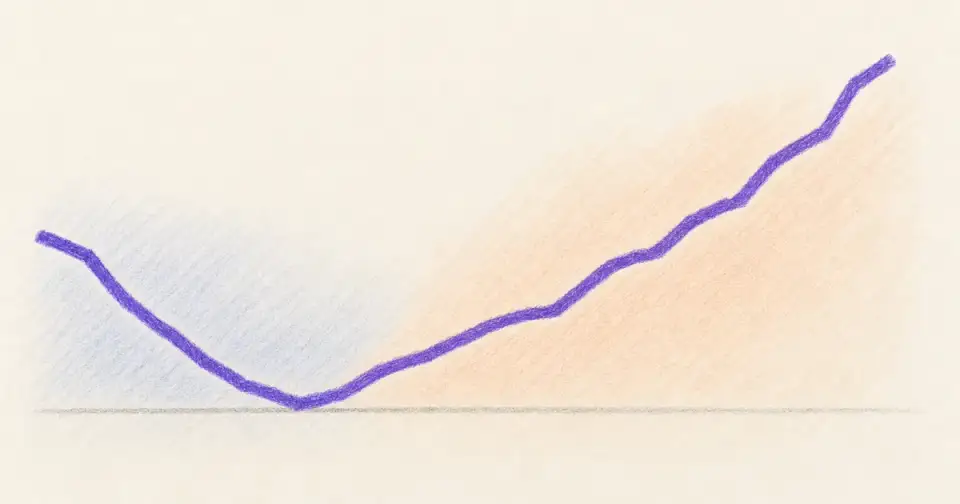
- The energy payoff tends to arrive later and indirectly, as carrying less weight makes movement easier and steadier blood sugar smooths out the spike-and-crash rhythm.
- Eating enough (especially protein), staying hydrated, and gentle movement are the biggest levers for protecting your energy while your body adjusts.
- Fatigue that keeps getting worse, or comes with dizziness or confusion, is a reason to call your care team rather than wait it out.
Table of contents
- Does Mounjaro actually give you energy?
- Why do you feel more tired in the first few weeks?
- How the energy payoff actually arrives
- Is it Mounjaro or something else, and when should you call your care team?
- How to build your energy back on Mounjaro
Does Mounjaro actually give you energy?
Does Mounjaro give you energy directly? No, it's not a stimulant, so it won't hand you a caffeine-like lift the way an energy drink does. Still, plenty of people say they feel more energetic a few months in, and that's real. The energy doesn't come from the medication itself. It comes from what the medication changes: how much weight you carry, how steadily you eat, and how even your blood sugar stays.
Mounjaro's active ingredient is tirzepatide, a GIP and GLP-1 receptor medication. The Cleveland Clinic explains that it lowers blood sugar by raising insulin, slows down digestion, and reduces appetite. Mayo Clinic notes it's used together with diet and exercise to help control blood sugar. None of those actions is a direct energy switch.

Is Mounjaro a stimulant?
A stimulant works fast and directly, nudging your nervous system. Mounjaro works slowly and indirectly. Its job is blood sugar, digestion, and appetite, so any change in how energetic you feel is a downstream effect, not a built-in boost. That's why the honest answer to 'does it give you energy' is: not directly, but often eventually.
Why do people feel more energetic on it?
The lift, when it comes, is borrowed from other changes. Carry less weight and everyday movement costs less effort. Eat more steadily and your blood sugar stops spiking and crashing. Hold that glucose more even, especially with type 2 diabetes, and the afternoon wall softens. The same pattern shows up with other GLP-1 medications, and you can read about energy changes on semaglutide for a close comparison.
Here's the roadmap of channels an energy change actually travels through:
- Weight carried: less to move means movement costs less
- Eating steadiness: even meals mean fewer blood-sugar swings
- Blood sugar control: steadier glucose, fewer energy crashes
- Sleep: for some people, rest improves as weight comes down
- The early side-effect load: heaviest at first, then easing

The two-phase energy arc
Expect two phases, not one. The first month can actually feel like less energy, not more, as your body adjusts and eats far less than it's used to. The payoff tends to arrive later, once the weight starts coming off and your eating settles. A rough first few weeks isn't a sign it's failing. The SURMOUNT-MAINTAIN trial found long-term treatment is often needed to keep the benefits, so gains build with continued use rather than appearing overnight.
One caveat worth being straight about: the big tirzepatide trials measured weight, appetite, and blood sugar, not 'energy' as a feeling. So this isn't a promise that you'll feel more energetic. It's an explanation of the mechanisms behind why so many people do. If your energy doesn't budge, you're not doing it wrong.
Your starting point shapes the picture. If you have type 2 diabetes, better glucose control is part of the story in a way it isn't for someone taking Mounjaro for weight alone. Where you are in the dose steps matters too. Early on, side effects dominate; later, the weight and eating changes take over. Your care team can tell you what to expect for your situation.
First, though, the part nobody warns you enough about: why the earliest weeks can feel like a dip instead of a lift.
Why do you feel more tired in the first few weeks?
Feeling more tired in your first few weeks on Mounjaro is common, and it's expected. Most people notice less energy, not more, at the start. That early dip usually traces to three things happening at once: you're suddenly eating far less, your stomach is adjusting, and your dose is still climbing. None of it means the medication is working against you. It means your body is catching up to a big change.
The first driver is a real drop in calories. Appetite fades fast on tirzepatide, and intake follows. In a Diabetes Care analysis, people on tirzepatide ate about 185 fewer calories a day than the placebo group by week 8, and the gap widened to about 310 fewer a day by week 28. That's a meaningful deficit, and your body feels it as less fuel to spend.

Eating far less than you're used to shows up as tiredness. When you under-fuel, there's simply less energy available for everything else in your day. This tends to hit hardest right as your appetite bottoms out, which is often the same stretch where the scale is moving fastest. If you want the timeline on that, see when appetite starts to drop.
Stomach side effects and dehydration
Symptom | How common on tirzepatide | Why it saps energy |
|---|---|---|
Nausea | 12–24% | Makes eating hard, deepening the calorie gap |
Diarrhea | 15–17% | Drains fluids and leaves you wiped out |
Vomiting | 6–10% | Loses fluids and food you need for fuel |
Decreased appetite | 6–12% | You eat less, so you have less to burn |
Those stomach symptoms pull double duty on your energy. Nausea, diarrhea, and simply eating less all draw fluids down, and being low on fluids leaves you feeling drained on its own. Staying ahead of hydration is one of the few early levers you fully control. If the gut symptoms are your main problem, we cover why tirzepatide can cause nausea and diarrhea on tirzepatide in more depth.
Why each dose increase resets the clock
Every dose step can bring a fresh wave of tiredness. Tirzepatide starts low, at 2.5 mg once a week, and steps up by 2.5 mg no sooner than every four weeks, up to a maximum of 15 mg. Each increase asks your body to adjust again, so the nausea and fatigue that had settled down can briefly return. A rough few days after a dose change is usually the adjustment, not a warning sign.

The tiredness of these first weeks is the adjustment, not the destination.
The low-blood-sugar question
On its own, Mounjaro rarely drops your blood sugar too low. In SURPASS-3, low blood sugar showed up in only about 1 to 2% of people on tirzepatide, versus 7% on insulin. The picture changes if you also take insulin or a sulfonylurea, where the risk climbs, and a low can feel exactly like sudden exhaustion. If that's you, ask your care team how to watch for it.
The timing is the tell. This cluster tends to be heaviest in the first weeks and right around each dose step, and in SURPASS-3 the most common stomach side effects were mild to moderate events that decreased over time as the body adjusted. If the tiredness tips into feeling sleepy, whether Mounjaro can make you sleepy digs into that separately.
- A bigger calorie deficit as appetite drops
- Stomach side effects like nausea and diarrhea
- Dehydration from lower intake and fluid loss
- Each dose step restarting the adjustment
- Disrupted sleep while your body adapts
- Low blood sugar if you also take insulin
How the energy payoff actually arrives
The energy tends to arrive later, and it arrives sideways. Mounjaro doesn't hand you a lift the way coffee does. What most people feel over the months is the payoff of carrying less weight, eating on a steadier rhythm, and holding blood sugar more even. It builds quietly, and then one ordinary week the stairs stop feeling like a project.
The weight change is the engine, and it's large. In SURMOUNT-1, published in the New England Journal of Medicine, average weight fell 15.0% at 5 mg, 19.5% at 10 mg, and 20.9% at 15 mg over 72 weeks, versus 3.1% on placebo. A meta-analysis in the International Journal of Obesity pooled the trials and found roughly 9 kg lost in people with diabetes and 18 kg in people without. Less mass to move is the quiet start of everything that follows.
Less weight, cheaper movement
Here's the plain mechanism. When your body is carrying less, everyday movement tends to cost less effort, so a walk or a flight of stairs feels less like a workout. The research measures the weight, not the stamina, so treat this as the reasonable read rather than a promise. If you want the mechanics of the loss itself, how GLP-1 helps you lose weight and how tirzepatide burns fat go deeper than we will here.

Phase | What often happens with energy | Why |
|---|---|---|
Weeks 1–4 | Often a dip, not a lift | Calorie deficit, stomach side effects, each dose step |
Months 2–3 | The dip eases for most | Body adjusts, eating steadies |
Months 4–6+ | Movement can feel easier | Meaningful weight is off, blood sugar more even |

Steadier eating, steadier energy
Steadier eating smooths the spikes and crashes. As appetite calms, meals get smaller and more even, and a day without big food swings tends to be a day without big energy swings. Tirzepatide measurably reduced appetite versus placebo, and a calmer appetite is what makes that even rhythm possible. Fewer crashes at 3 p.m. is a real part of what people are calling 'more energy.'
Steady energy is built from an even day, not borrowed from a stimulant.
Blood sugar and the diabetes picture
Steadier blood sugar is its own kind of energy, especially with type 2 diabetes. The meta-analysis in the International Journal of Obesity found tirzepatide improved hemoglobin A1c along with weight, and steadier glucose across the day can read as steadier energy. In SURMOUNT-1's three-year follow-up in the New England Journal of Medicine, type 2 diabetes was diagnosed in 1.3% on tirzepatide versus 13.3% on placebo. If you have diabetes, how this plays out for you belongs with your care team, since your other medicines change the picture.
Because the payoff is gradual, it's easy to miss while you're living it. The move is to log your daily energy next to shot day, your food, and your movement in one place, so 'am I actually more energetic?' stops being a vibe and becomes a line you can see. When the early dip lifts and the better weeks start stacking, the trend shows up before your memory does. That's the same slow, sustained arc the three-year SURMOUNT-1 data describes, watched from inside your own week. If you're wondering how long tirzepatide takes to work, your own log answers it sooner than a calendar will.
Does it help you sleep?
What about sleep? Here the honest answer is that the data is thin. Some people say they sleep better as weight comes down, and better sleep would obviously lift daytime energy, but our sources measured weight, appetite, and blood sugar, not sleep. Treat a better night as a welcome maybe, not a promised result. If sleep is going the other way, trouble sleeping on tirzepatide is worth a look on its own.
- Everyday movement that costs less effort as weight comes off
- More even blood sugar across the day, especially with diabetes
- Fewer mid-afternoon crashes once eating steadies
- Better sleep for some, though the evidence here is thin
- Gains that build slowly and hold with continued use
Related reading
- Whether Mounjaro can make you sleepy
- Energy changes on semaglutide
- How long tirzepatide takes to work
- When appetite starts to drop
- Why tirzepatide can cause nausea
- Diarrhea on tirzepatide
Is it Mounjaro or something else, and when should you call your care team?
Most early tiredness is the adjustment, but tiredness that drags on or deepens deserves a second look. Mounjaro isn't the only thing that makes people feel wiped out, and the timing of your fatigue is the best first clue to which it is. When it lingers past the first weeks or gets worse instead of better, it's worth checking for other causes.
Drug-related fatigue tends to cluster early and around each dose step, then ease. Fatigue that starts later, keeps worsening, or hangs on after your body has settled points somewhere else. In a Mayo Clinic Connect discussion, one member whose tiredness didn't improve was told that since it hadn't lifted, Mounjaro was unlikely to be the primary cause. Timing is the tell: the adjustment fades, other causes don't.
Your pattern | More likely | What to do |
|---|---|---|
Tired early, easing week by week | The adjustment | Ride it out, support your energy |
Tired with nausea or low intake | Side effects, dehydration | Fluids, small meals, ask your pharmacist |
Getting worse or starting late | Something else | Ask for blood work |
Tired with dizziness or confusion | Possible low blood sugar | Call your care team now |
Other causes worth ruling out
Fatigue has a long list of ordinary causes, and Mounjaro can take the blame for something unrelated. Anemia, an under-active thyroid, and other medicines are common culprits; statins, for instance, can cause muscle fatigue that shows up even after years on them. In that same Mayo Clinic Connect discussion, a member's exhaustion persisted a full month after stopping Mounjaro, which pointed the conversation toward a fuller workup, including a check for anemia that hadn't been run. The lesson isn't alarm, it's that persistent fatigue earns a real look.
Red flags that mean call now
A few patterns mean call now, not later. Fatigue with dizziness or confusion can signal low blood sugar, and that risk climbs if you also take insulin or a sulfonylurea. Severe stomach pain that won't go away, with or without nausea, is on the Mounjaro label as a reason to stop and call your care team right away, because it can signal pancreatitis. And exhaustion paired with shortness of breath or weakness is a same-day call, since those can be signs of something in the heart rather than the medication.

Routine tiredness eases; exhaustion that deepens or comes with dizziness is a phone call, not a wait-and-see.
- Fatigue is getting worse instead of easing
- You feel dizzy, shaky, or confused
- You can't keep fluids down
- You notice signs of low blood sugar
- You have severe stomach pain that won't quit
- Tiredness comes with chest tightness or breathlessness
When tiredness is really low blood sugar
A low blood sugar can feel exactly like being wiped out. It often comes with feeling shaky, sweaty, or suddenly drained, and it's easy to mistake for plain fatigue. On its own Mounjaro rarely drives blood sugar low, but the label notes the risk rises when it's paired with insulin or a sulfonylurea. If that's you, ask your care team how to spot and treat a low, and know that what shows up in your blood work can help sort fatigue from a sugar problem.
When fatigue won't lift, your care team usually has a short list they run. That often means blood work for anemia, thyroid, and blood sugar, plus a review of every medicine you take, since interactions and other drugs pile on. It's the same direction the Mayo Clinic Connect discussion landed on: a full check rather than a guess. If sedation is more your issue than exhaustion, whether Mounjaro can make you sleepy is a different question worth its own look.
One thing not to do: quietly stop on your own. The move most care teams advise is to keep taking Mounjaro as prescribed unless they tell you otherwise, and to bring them the decision rather than making it solo. The Lancet's SURMOUNT-MAINTAIN trial found that continuing tirzepatide kept the weight and health benefits in place, so stopping carries real trade-offs worth talking through. If fatigue is the problem, the fix is usually a plan, not an exit.

How to build your energy back on Mounjaro
You can protect and even rebuild your energy on Mounjaro, and the single biggest lever is simple: eat enough. When appetite drops fast, most people quietly under-fuel, and under-fueling shows up as tiredness. Protein first, enough total food, steady meals. None of this is a prescription, so run any real plan past your care team, but the day-to-day habits below are where most of the energy actually comes back.
Eat enough. It's the biggest lever.
Lean on protein and whole foods. On a much smaller appetite, what you do eat matters more, so build meals around nutrient-dense, minimally processed foods: lean proteins, vegetables, whole grains, legumes, nuts, fruit. Go easy on refined carbs and sugary drinks, which tend to lift you and then drop you. If you have noticed thinning while barely eating, the same fix helps there too, which is why hair loss from under-eating traces back to fueling. Enough food, most days, beats a perfect day now and then.
- Eat small meals every few hours, even on a light appetite
- Put protein first at each meal
- Choose nutrient-dense, minimally processed foods
- Limit refined carbs and sugary drinks that spike then crash
- Keep fluids going alongside meals
- Don't skip a meal just because nothing sounds good
The not-hungry trap is real. Mounjaro can make nothing sound good, and it is easy to slide into a cycle where you don't eat, feel worse, and then want food even less. That cycle drains energy fast. The way out is small, regular meals even when hunger is gone, treating food a bit like a scheduled habit instead of something you wait to crave. This is hardest right when appetite starts to drop, so it helps to plan for it.

Move gently, hydrate, and pace yourself
Move a little, drink water, go easy through each step. Gentle, regular activity tends to build energy rather than spend it, so a short walk usually helps more than resting all day. If achy joints make that harder, joint pain and staying active covers ways to keep moving. Staying hydrated heads off a surprising amount of tiredness, and dry mouth and staying hydrated has practical tips. And ease through each dose step, which is when your body is working hardest to adjust.
The medication does its part on its own. What you eat, how you move, and how gently you climb each dose is the part that decides how you feel getting there.
Get your shot routine steady
A steady shot routine keeps side effects, and the tiredness they bring, as low as possible. The Mounjaro label has people inject under the skin of the abdomen, thigh, or the back of the upper arm, and rotate the spot with each weekly shot so no single area gets overworked. Your care team shows you how the first time. One firm rule: never share a pen with anyone, even with a fresh needle, because of the risk of passing blood-borne infections. Getting the basics right early makes shot day feel routine instead of rough.
Small handling habits keep each dose smooth. Before a shot, look at the liquid: it should be clear and colorless to slightly yellow, and you skip it if you see floating bits or a color change. You can take Mounjaro once a week at any time of day, with or without food, so pick the day that fits your life and keep it consistent. If you ever shift your day, the label keeps doses at least three days apart, and you never double up to make up a miss. A predictable rhythm keeps the drain that comes with side effects low.
- Eat enough, with protein at every meal
- Keep water nearby and sip through the day
- Small, regular meals beat one big one
- Add gentle movement, like a daily walk
- Rotate your injection site with each shot
- Keep a consistent weekly shot day
- Note how you feel so you can see the trend
Give it time. For most people the early dip is the adjustment phase, not the destination, and steadier energy tends to build over the following weeks and months as your body settles and weight starts to come down. Keep the habits simple and repeatable. And loop in your care team about anything that isn't easing, or any tiredness that keeps getting worse instead of better, since that is worth a proper look.
Related reading
- Trouble sleeping on tirzepatide
- Dry mouth and staying hydrated
- Joint pain and staying active
- How tirzepatide burns fat
- How GLP-1 helps you lose weight
- Whether tirzepatide helps with anxiety
- Hair loss from under-eating
- What shows up in your blood work
- How long tirzepatide takes to start working
- Changes to your period
Frequently Asked Questions
How long does Mounjaro-related fatigue usually last?
For most people it is heaviest in the first few weeks and around each dose increase, then eases as the body adjusts, since stomach side effects are most likely during starting and dose steps. It is usually a temporary adjustment rather than a permanent state. If it drags on well past the early weeks or keeps worsening, that points elsewhere and is worth a call. For more on daytime sleepiness, see whether Mounjaro can make you sleepy. It also explains why so many people eventually flip the question and ask, does Mounjaro give you energy, once that early adjustment is behind them.
Does everyone get more energy on Mounjaro?
No. Mounjaro is not a stimulant, so it does not hand anyone a caffeine-like lift, and the energy change it can bring is indirect. Many people do feel steadier and more energetic over time as weight comes down and eating evens out, but the timing and size of that shift vary a lot from person to person, and the first weeks often feel like less energy, not more. It is a trend to watch for, not a guarantee.
Can Mounjaro cause low blood sugar that feels like exhaustion?
A blood-sugar low can absolutely feel like sudden exhaustion, often with shakiness or a wiped-out fog. On its own Mounjaro is not a common cause, but the picture changes if you also take insulin or another diabetes medicine, so that is a conversation for your care team. If tiredness comes with dizziness or confusion, treat it as urgent and call them rather than waiting it out.
Should I take Mounjaro in the morning or at night for more energy?
Timing does not change the energy picture. Mounjaro is a once-weekly shot you can take at any time of day, with or without food, so there is no morning-versus-night trick for feeling more energetic. The more useful move is picking a day and time that is easy to remember and sticking with it, so doses stay consistent and shot day never sneaks up on you.
Will eating more protein really help my energy on Mounjaro?
For a lot of people, yes. On a much smaller appetite the real risk is not eating enough overall, and getting adequate nutrition within a lower-calorie diet is exactly where energy is protected. Protein helps you feel fed on less and supports muscle while you lose weight. It is not a magic switch, but paired with enough total food and regular meals, it is one of the most reliable levers you have.
This article is for informational purposes only and is not medical advice. Always talk to your doctor or care team about your medication, symptoms, or treatment plan.