

Key takeaways
- Diarrhea affects about 30% of people on Wegovy versus 16% on placebo, and it's usually mild and temporary.
- It tends to cluster right after each dose increase and often eases within a few days as your body adjusts.
- Small, gentle meals, steady hydration with electrolytes, and easing off high-fat and spicy foods are the moves that help most.
- Slowing your dose-increase schedule with your care team can lower the odds of diarrhea without giving up results.
- Call your care team if diarrhea won't stop, you can't keep fluids down, or you notice signs of dehydration.
Table of contents
- How common is diarrhea on Wegovy, and when does it usually hit?
- Why does Wegovy cause diarrhea?
- What actually helps Wegovy diarrhea at home?
- Can changing your dose schedule reduce diarrhea?
- When should you call your care team about Wegovy diarrhea?
How common is diarrhea on Wegovy, and when does it usually hit?
About 30% of people on Wegovy 2.4 mg report diarrhea, compared with roughly 16% on placebo, per the Wegovy prescribing information. For most, it's mild and short-lived rather than severe. It also rarely comes out of nowhere. It tends to track with dose changes, showing up as your body meets a higher weekly dose and then settling as things level off.
Wegovy 2.4 mg | Placebo | |
|---|---|---|
44% | 16% | |
Diarrhea | 30% | 16% |
Vomiting | 24% | 6% |
24% | 11% | |
Abdominal pain | 20% | 10% |
The reassuring part is the severity, not just the rate. In a pooled analysis of the STEP 1–3 trials, 98.1% of stomach side effects were mild-to-moderate and 99.5% were non-serious. Only 4.3% of people stopped semaglutide because of stomach issues. Stomach-related effects are also the most common category of side effect on semaglutide, so diarrhea usually shows up alongside milder company like nausea rather than signaling something rare.
When does Wegovy diarrhea usually start?
Symptoms cluster around dose escalation, not at random. The same STEP analysis found stomach side effects occurred most frequently during and shortly after each dose step-up. Wegovy climbs in stages over the first months, and each new step is the moment your gut meets a higher dose. So a stretch of loose stools a few days after moving up is the common pattern, while a calm week at a steady dose is exactly what you'd expect once you've settled.
- The first weeks after your very first shots
- Each escalation step, when your weekly dose goes up
- The few days right after a dose change, not weeks later
- Less often during a long stretch at the same dose
- Rarely as a brand-new problem once you're steady at maintenance

How long does a bout of Wegovy diarrhea last?
A rough patch tends to be short-lived. Because these effects are transient, a bout usually eases within a few days rather than dragging on for weeks. That's the typical arc: a cluster of off days after a change, then a return to your normal. If loose stools are constant for weeks or keep getting worse, that's a different story worth flagging to your care team.
For most people, it's a phase, not a permanent trade-off. The STEP trials concluded that stomach effects on semaglutide were typically mild-to-moderate and transient, easing as the body adjusts to each dose. The pattern usually softens the longer you hold at a given step, which is why the roughest weeks are often the early ones. Knowing it's tied to adjustment can make an unpleasant stretch feel less like a red flag and more like a passing step.

Seeing the pattern in your own data
This is where your own log gets useful. When you line up your shot day against your symptom notes, the clustering usually jumps out: the off days bunch in the window right after a dose bump, then fade. Watching that play out across a few weeks makes it easier to tell a normal adjustment week from something that's genuinely off-script, and it gives your care team a clear picture if you do reach out.
If it's this predictable, the obvious question is why. What is semaglutide actually doing to loosen things up around each dose change? That's what the next section unpacks.
Why does Wegovy cause diarrhea?
Semaglutide changes how your digestive system moves food along, and that shift can loosen stools. The same slowdown that helps you feel full longer also alters the rhythm of your gut, and for some people that rhythm change shows up as diarrhea rather than the more talked-about nausea or constipation.
How semaglutide affects your gut
Two things are happening at once. Semaglutide delays gastric emptying, so food leaves your stomach more slowly, and it acts on GLP-1 receptors tied to the brain centers involved in appetite, fullness, and nausea. Those same signals influence how your gut handles what passes through it, which is why stomach side effects are the ones most often reported.
- Slower emptying — food leaves your stomach at a gentler pace
- Altered gut rhythm — the muscles moving food along shift their timing
- Changed digestion — how your system processes a meal is thrown off briefly
- The result — for some people, looser and more frequent stools
Dose is the biggest lever. In an International Journal of Obesity review, semaglutide carried a relative risk of diarrhea of about 1.77 versus placebo, and the risk climbed as the dose rose. The pattern isn't a straight line, though: the review found the risk rose fastest at the lower doses, then tended to plateau at higher ones.
Why higher doses feel harder at first
The honest answer is that the full picture isn't settled. Researchers note that the precise mechanism behind these effects isn't fully understood. The science describes what semaglutide does to your gut more confidently than exactly why it produces diarrhea in one person and constipation in another. If your experience doesn't match the textbook, that's normal.

What this means for managing it
Here's the useful part. Because diarrhea is largely a dose-and-adjustment effect, the levers that help are the ones you control day to day: what you eat, how well you hydrate, and how quickly you climb the dose ladder. That's exactly where the next section goes.
What actually helps Wegovy diarrhea at home?
Most Wegovy diarrhea settles at home with a few low-drama changes: gentler food, smaller and more frequent meals, steady fluids, and a couple of over-the-counter tools when you need them. Mayo Clinic's everyday fixes come down to eating smaller, frequent meals, staying hydrated, easing off high-fat and spicy foods, and building fiber back slowly. None of it is dramatic, and most of it you already have in your kitchen.
Gentle foods that go down easy
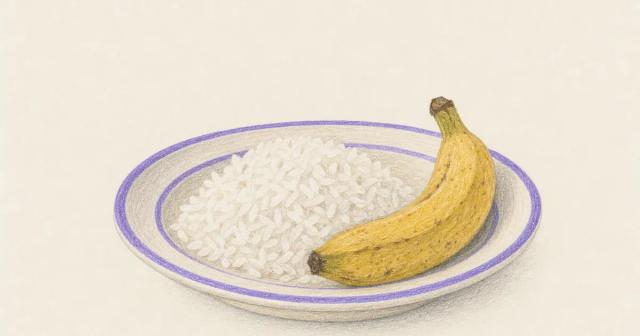
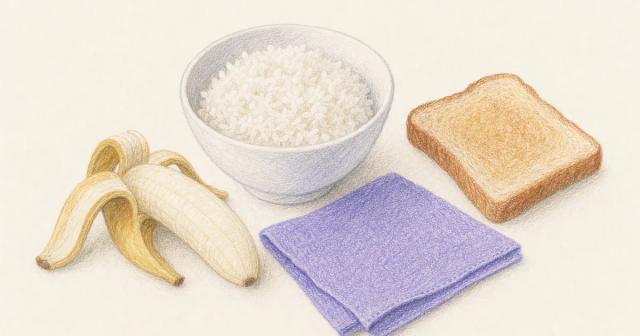
While your gut settles, keep meals plain and easy to digest. Phlo Clinic points to the classic gentle options — rice, bananas, applesauce, toast, and plain cooked vegetables — the same low-residue foods you'd reach for after any stomach upset. They're bland on purpose: not much fat, not much spice, nothing that asks your digestion to work hard. Think of it as a short reset, not a forever diet. You go back to normal eating as things calm down.
- Plain rice — easy to digest, low residue
- Bananas — gentle and settling
- Applesauce — soft and low in fat
- Toast — plain, skip the rich spreads
- Plain cooked vegetables — no heavy sauces
Favor while it settles | Ease off for now |
|---|---|
Rice, toast, bananas, applesauce | Very fatty or fried foods |
Plain cooked vegetables | Spicy dishes |
Clear broths and water | Rich, heavy meals |
Small, frequent portions | Large single meals |
Smaller portions, more often, tend to go down easier than three big plates. Phlo Clinic notes that eating smaller amounts more frequently is gentler on the stomach and may cut symptoms compared with larger meals, and Mayo Clinic gives the same advice. On Wegovy you're probably less hungry anyway, so this often lines up with how you already want to eat. A half-portion now and the rest a couple of hours later beats forcing a full meal your gut isn't ready for.
Foods and drinks that tend to make it worse
High-fat, spicy, and rich foods are the usual troublemakers. Mayo Clinic's side-effect guidance specifically flags high-fat and spicy foods as ones to pull back on while your system adjusts, and the same goes for heavy, greasy, or very rich meals. You don't have to swear them off forever. The move is to ease off during the window right after a dose step-up, when your gut is most reactive, then reintroduce slowly once things are steady.
Staying ahead on fluids
Diarrhea pulls fluid and electrolytes out of you, so replacing them is the priority. Phlo Clinic notes that loose stools can lead to fluid and electrolyte loss, and that water, herbal teas, clear broths, and drinks with electrolytes help replace what's gone and head off dehydration. Sip steadily through the day rather than gulping a lot at once. If you're also dealing with nausea, small frequent sips are easier to keep down than a full glass.
- Water, sipped steadily through the day
- Clear broths for fluid plus a little salt
- Electrolyte drinks to replace what's lost
- Herbal teas, warm and easy on the stomach

OTC options, and where the line is
Two over-the-counter tools can help when food changes aren't enough. For meaningful diarrhea, fiber capsules or powders add bulk to loose stools, and anti-diarrheal medicines can give short-term relief when you really need it. Fiber works by firming things up; an anti-diarrheal is more of an acute, get-through-the-afternoon option. Neither one fixes the underlying cause, which is your body adjusting to the medication, so treat them as comfort measures rather than a long-term plan.
Run any over-the-counter option past your care team before you lean on it. Mayo Clinic's guidance is plain: if side effects persist or worsen, check in with a healthcare professional rather than managing on your own. And don't use an anti-diarrheal to push through symptoms that keep escalating — that's a signal to get help, not to double down. Your care team can tell you what's safe alongside your prescription.
If you add fiber, add it slowly. Mayo Clinic's advice is to increase dietary fiber gradually rather than all at once. Pile it on too fast and you can swing from loose stools toward bloating, gas, or constipation — trading one uncomfortable problem for another. A little more each day gives your gut time to keep up. This is also why a sudden fiber-heavy health kick right after a dose increase tends to backfire.
Track what sets it off
A simple food-and-symptom diary earns its keep. Phlo Clinic suggests keeping a short record of foods, timing, and symptoms so you can spot your own triggers and bring real patterns to your care team. It doesn't have to be fancy — a note on what you ate, when you took your shot, and how you felt is enough. Over a few weeks, your own data usually points straight at the culprit.
Your own notes will out-diagnose any general food list — the pattern that matters is yours.
When food and fluids only get you so far, look up the ladder. Sometimes the home measures help but don't fully settle things, and the sticking point is how fast you're climbing to your full dose. That's not something to change on your own, but it is worth putting on the table. The next question is whether adjusting your dose schedule can take the edge off.
Related reading
Can changing your dose schedule reduce diarrhea?
Yes — slowing or pausing the climb to your full dose often eases diarrhea, and it's a decision to make with your care team. The published guidance for these medications includes specific steps for how to reach the maintenance dose and what to do if stomach side effects show up during dose escalation. In plain terms: the ramp-up is adjustable, and there's a right way to adjust it that doesn't mean going it alone.
Why a slower climb helps
A tailored, slower titration is one of the main levers for tolerability. Tailored dose schedules and good counseling improve how well people tolerate these medications, and the same stomach side effects can otherwise dent adherence and push people to quit. The practical guidance is built partly to keep people from withdrawing from treatment over side effects they could have ridden out. Slower isn't weaker — it's often what keeps you on the medication long enough to benefit.

Once you're past the escalation phase, diarrhea rates drop. In STEP 4, diarrhea showed up in about 14.4% of people on semaglutide versus 7.1% on placebo, and discontinuations for stomach side effects stayed low and close to placebo, at 2.4% versus 2.2%. Compare that with the escalation-heavy STEP 1 trial, where diarrhea ran closer to 31.5%. The pattern is consistent: the maintenance stretch is generally calmer than the climb.
Because symptoms cluster around each step-up, the timing of the ladder matters. Across the trials, these side effects were dose-dependent and highest during dose escalation — they tend to flare right after you move up, then settle. That's why holding at your current dose a little longer, or stretching the time between steps, can smooth the ride. You're not avoiding the destination, just taking the stairs at a pace your gut can handle.
What to actually ask about
- Hold at your current dose for a few extra weeks
- Stretch the gap between each step up
- Use a slower ladder overall, if your care team agrees
- Revisit the plan if one step hits you hard
One hard rule: don't change your own dose. Adjusting the ramp-up is a clinical decision, not a solo one. Skipping a step, doubling up to catch up, or stopping cold on your own can create new problems and muddy what's actually going on. Bring your symptoms, your diary, and your questions to your care team, and let the change be a shared call. That's the whole point of a tailored schedule — it's tailored to you, by someone who can see the full picture.
Maintenance is usually the easier stretch

The maintenance dose is usually the easier stretch. Once you're through the climb, most people find the day-to-day settles — and they stay on long enough to see real results. In two-year semaglutide data published in Nature Medicine, the average body-weight change reached about 16.7% by week 104, a reminder that the goal is staying on a dose you tolerate, not powering through one you don't.
Knowing the dose lever exists takes some of the fear out of side effects. Most Wegovy diarrhea is manageable with food, fluids, timing, and a care-team conversation about pace. Still, a few symptoms aren't the ordinary kind and shouldn't wait. Next is how to tell an everyday side effect from one that means it's time to pick up the phone.
When should you call your care team about Wegovy diarrhea?
Call your care team if diarrhea won't go away, you can't keep fluids down, or you notice signs of dehydration. Most Wegovy-related diarrhea is mild and passes on its own, but the Wegovy Medication Guide is direct about one line you shouldn't wait on: tell your provider right away if diarrhea, nausea, or vomiting doesn't settle. That's the signal that a normal side effect may be tipping into something worth a check-in.

Mild and expected | Call your care team |
|---|---|
Loose stools for a few days after a dose step-up | Diarrhea that won't go away |
Mild cramping that eases between trips | Severe or lasting stomach pain |
Symptoms that fade as you drink and eat gently | You can't keep fluids down |
A single short bout that settles on its own | Dizziness, dark urine, or peeing much less |
Feeling a bit tired or off | Any symptoms of a serious allergic reaction |
Dehydration is the real risk to watch
The biggest reason to keep an eye on diarrhea is fluid loss. Per the Wegovy Medication Guide, diarrhea, nausea, and vomiting can drain enough fluid to leave you dehydrated, and dehydration can in turn strain your kidneys. The label's fix is simple and worth taking seriously: keep drinking to lower your chance of dehydration, and flag symptoms that don't ease to your provider. If you're losing fluid faster than you can replace it, that's not a wait-and-see situation.
How to tell an ordinary bout from a red flag
Here are the signs that mean pick up the phone. They're worth knowing by heart so you're not second-guessing in the moment.
- Diarrhea that won't stop or keeps coming back for days
- Severe or lasting stomach pain, not just mild cramping
- Signs of dehydration: dizziness, dark urine, peeing much less
- Can't keep fluids down — everything comes back up
- Serious allergic reaction symptoms — stop and get help right away
That last one is its own category. The Wegovy Medication Guide says to stop using Wegovy and get medical help right away if you have any symptoms of a serious allergic reaction. That's not a same-side-effect-as-usual moment — it's an urgent-care or emergency call.
When drawn-out symptoms deserve a call
Sometimes the hard part isn't a dramatic red flag — it's knowing whether a nagging bout counts. Research in the International Journal of Obesity found that the challenges in diagnosis are a real theme with these medications, alongside the types and timing of stomach side effects and their impact on quality of life. In plain terms: it can genuinely be tough to tell an ordinary Wegovy side effect from something that needs attention. When you can't tell, err toward reaching out.
Everyday impact counts too. The same International Journal of Obesity work names the impact on quality of life and treatment continuity as a core issue — meaning symptoms that drag on, wreck your sleep, or keep you close to a bathroom are worth a check-in even when they aren't an emergency. You don't have to be doubled over to deserve a conversation. If diarrhea is steadily wearing you down, that's information your care team wants.
You don't have to be doubled over to deserve a conversation with your care team.
Related reading
- Injection site soreness
- Mood changes
- Hot flashes
- Slow weight loss
- Staying on Wegovy long term
- How long Wegovy stays in your system
- Compounded semaglutide
- Wegovy results over time
- Oral Wegovy's side effects
- The pill versus the injection
Frequently Asked Questions
How long does diarrhea usually last on Wegovy?
For most people it's short-lived. Diarrhea tends to cluster right after a dose step-up and eases within a few days as your body adjusts to the new dose, rather than sticking around for weeks. If a bout keeps going, keeps coming back, or leaves you unable to keep fluids down, treat that as your cue to check in with your care team instead of waiting it out.
Is it safe to take Imodium or another anti-diarrheal for Wegovy diarrhea?
Clear any over-the-counter anti-diarrheal with your care team before you reach for it. They can be a reasonable tool for short-term relief for some people, but they're not a way to push through symptoms that keep escalating. If you find yourself needing one regularly, that's a sign to talk about your dose schedule rather than to keep medicating around the problem.
Does diarrhea mean Wegovy is working?
No. Diarrhea is a side effect of how semaglutide affects your gut, not a scorecard for weight loss. Plenty of people lose weight with few stomach symptoms, and having diarrhea doesn't mean the medication is working harder or better. Judge how well it's working by your results over time and your conversations with your care team, not by how your stomach feels this week.
Can Wegovy still cause diarrhea months after starting?
It can. Diarrhea most often shows up around dose increases, so it can reappear whenever your dose changes, even well into treatment. It's also possible to have an off day at a steady dose. What's less typical is new, severe, or persistent diarrhea after a long stretch of feeling fine — if that happens, it's worth flagging to your care team rather than assuming it's just the medication.
This article is for informational purposes only and is not medical advice. Always talk to your doctor or care team about your medication, symptoms, or treatment plan.