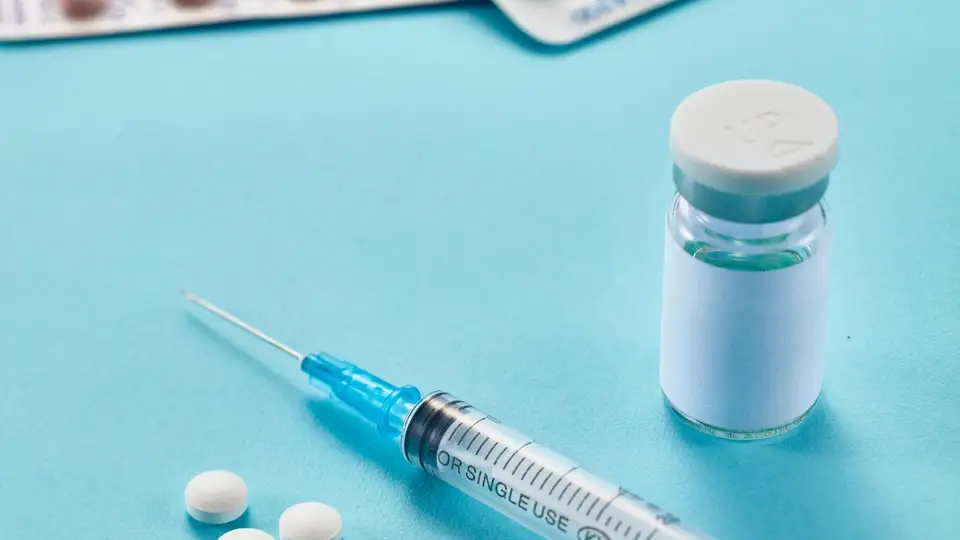

Wegovy has gained attention for its impressive weight loss results, but confusion often arises when people search for pill versus injection options. Currently, Wegovy exists only as a weekly injection, though many wonder if a pill version is available or coming soon. Understanding the available options today helps clarify which semaglutide delivery method might work best for individual weight-loss goals.
Making sense of medication options doesn't need to feel overwhelming. Whether considering injectable Wegovy or exploring oral alternatives like Rybelsus, having the right guidance makes all the difference in tracking progress, managing side effects, and staying informed about the latest GLP-1 developments. MeAgain's GLP-1 app provides personalized support to help make confident decisions about weight loss strategy.
Summary
- Wegovy is currently FDA-approved only as a weekly injection, not as a pill. While oral semaglutide is available under the brand name Rybelsus, people searching for "Wegovy pill" often confuse the two medications or wonder whether a pill version will become available. This distinction matters because each format requires different administration protocols and delivers different bioavailability rates.
- Weekly injections require 52 commitments per year, while daily pills demand 365 flawless performances with strict fasting windows. Injectable Wegovy delivers 89% bioavailability, meaning nearly 9 out of 10 milligrams reach your bloodstream, while oral semaglutide achieves only 1 to 2%, requiring doses up to 10 times higher to achieve comparable outcomes. The pill must be taken on an empty stomach with no more than 4 ounces of water, then wait 30 minutes before consuming food, coffee, or other medications.
- Clinical trials showed injectable Wegovy achieved 15% body weight loss over 68 weeks, while oral semaglutide reached 13.6% over 64 weeks. These similar outcomes occurred in controlled study environments where adherence was closely monitored, but real-world behavior creates a different picture when 365 daily decisions compete with chaotic mornings, travel schedules, and other medications. One mistimed dose or a forgotten morning dose erases that day's effectiveness, with no makeup option.
- The choice between formats should be based on demonstrated behavior patterns, not theoretical preference. Testing your ability to maintain a strict morning routine for seven consecutive days or follow a weekly reminder for a month reveals which execution model you can actually sustain. Most people underestimate how daily requirements compound into decision fatigue or how weekly commitments slip without external accountability.
- Medication effectiveness depends on daily habits surrounding GLP-1 treatment, including adequate protein intake to prevent muscle loss, sufficient fiber and water intake to avoid constipation, and consistent movement to maintain metabolism. Missing these fundamentals turns the medication into a temporary fix that stops working when you stop taking it, regardless of whether you chose pills or injections. The format matters far less than building a system that makes consistency automatic instead of optional.
- MeAgain's GLP-1 app addresses this by helping users hit protein, fiber, and water targets, track movement and recovery, and monitor progress through a visual Journey Card that makes consistency feel manageable rather than overwhelming.
Table of Contents
- Why “A Pill Is Easier” Is the Wrong Way to Compare Wegovy
- Wegovy Pill vs. Injection: Key Differences & What Actually Determines Your Results
- The Better Option Depends on What You Can Actually Stick To
- The Real Risk Isn’t Choosing Wrong — It’s Not Staying Consistent
Why “A Pill Is Easier” Is the Wrong Way to Compare Wegovy
The idea that a daily pill is better than a weekly injection because swallowing seems easier misses the real problem: staying consistent over time. A weekly injection asks you to remember 52 times a year. A daily pill requires 365 perfect doses, each needing to be taken on an empty stomach, with no more than 4 ounces of water, and a 30-minute wait before coffee, food, or other medication. One wrong sip of coffee or one missed dose, and absorption fails. What seems easier in theory becomes harder in practice when precision determines whether the medication works.
"A weekly injection asks you to remember 52 times a year. A daily pill requires 365 perfect doses with strict timing requirements."

How do weekly injections compare to daily pills for decision-making?
Fifty-two injection decisions spread across a year create a predictable rhythm. You pick a day, set a reminder, and the routine becomes automatic. Daily pills multiply decision points sevenfold, turning every morning into a test of discipline. Miss your window because you slept late or grabbed breakfast first, and you skipped that day entirely. No makeup dose, no second chance. According to WebMD, clinical trials showed patients on oral semaglutide achieved around 15% body weight loss, nearly matching injection results. However, those numbers came from controlled studies in which adherence was closely monitored. Real-world behaviour differs when nobody's watching your morning routine.
Why do absorption pathways affect medication effectiveness?
Pills must survive stomach acid, navigate complex absorption pathways, and compete with other ingested food. Injections bypass digestion entirely, delivering semaglutide directly into tissue for stable, predictable absorption. Same molecule, yes. But one route depends on perfect timing and an empty digestive system, while the other works reliably.
Why absorption rules trump convenience
Semaglutide tablets cannot be absorbed if food, liquid, or other medications are in your stomach. This is how the body works, not a suggestion. Oral GLP-1 medications face obstacles that injections never encounter. You must manage a narrow absorption window each morning, where one mistake means losing that day's dose. The injection asks you to remember to do it once a week. The pill demands perfect daily adherence; "pretty good" compliance doesn't yield "pretty good" results, but inconsistent blood levels and unpredictable outcomes.
How does execution sustainability compare to convenience?
Focusing on delivery convenience before execution flips the priority to sustainability. The question isn't which feels easier on day one—it's which method you'll still use correctly six months from now, when novelty fades. Weekly injections remove 313 decision points from your year. That's the gap between a sustainable habit and daily friction that quietly erodes adherence.
Which delivery method matches your actual life?
Choosing between the Wegovy pill and injection means matching delivery method to your lifestyle. If your mornings are busy, you take other medications, or you cannot commit to a daily schedule, the injection's simplicity becomes its advantage. The pill works for people who do well with a daily structure and can maintain that 30-minute fasting window. For everyone else, fewer decisions might matter more than avoiding a needle. But knowing which format works better only helps if you understand what drives results once you've chosen.
Related Reading
Wegovy Pill vs. Injection: Key Differences & What Actually Determines Your Results
Quick take Wegovy pill vs. Wegovy shot
Feature | Wegovy pill | Wegovy shot |
|---|---|---|
How you take it | One tablet daily in the morning on an empty stomach with ≤ 4 oz water; wait ≥ 30 minutes before any food, drink, or other oral meds | One injection weekly (abdomen, thigh, or upper arm) |
Typical dose ramp | 1.5 mg daily, increased every ~30 days to a max of 25 mg | Titrated weekly to a maintenance dose of 2.4 mg |
Average weight loss in trials | ~14% at 64 weeks | ~15% at 68 weeks |
FDA-approved uses | Chronic weight management in adults with obesity/overweight reduces the risk of heart attack, stroke, or CV death in adults with CVD | Same adult approvals; also approved for chronic weight management in adolescents ≥12 years with obesity |
Common side effects | Nausea, diarrhea, vomiting, constipation, abdominal pain, headache, fatigue (class-typical) | Same class-typical profile |
Who should avoid | People with a personal/family history of medullary thyroid carcinoma or MEN 2, or allergy to semaglutide | Same |
Typical out-of-pocket offers | Cash-pay $149–$299/month by dose; as low as $25/month with eligible commercial insurance | Cash pay is commonly $349/month; as low as $25/month with eligible commercial insurance |
Availability | Rolling out at major U.S. pharmacies and via select telehealth platforms | Widely available |
Results depend on how well your body absorbs the medicine and whether you use it as directed. The injection delivers 89% bioavailability—nearly nine out of every ten milligrams reach your bloodstream. The pill manages only 1-2%, requiring doses up to ten times higher (25 mg versus 2.4 mg) to achieve similar results. Higher doses compensate for substantial absorption losses, as semaglutide travels through your digestive system rather than entering tissue directly.
"The injection delivers 89% bioavailability—nearly nine out of every ten milligrams reach your bloodstream, while the pill manages only 1-2%." — Bioavailability Research
Factor | Wegovy Shot | Wegovy Pill |
|---|---|---|
Bioavailability | 89% | 1-2% |
Typical Dose | 2.4 mg | 25 mg |
Absorption Method | Direct tissue entry | Digestive system |
Dose Efficiency | ✅ Highly efficient | ❌ Requires compensation |
How does your digestive system affect pill absorption?
The pill must survive stomach acid, navigate intestinal barriers, and compete with food or medications for absorption. A 30-minute fasting window is required because food physically blocks absorption. SNAC technology (the absorption enhancer in oral semaglutide) helps, but cannot overcome poor timing. Taking the pill with breakfast or skipping the waiting period causes that dose to be lost. The injection bypasses digestion entirely, delivering semaglutide subcutaneously regardless of food intake, vitamins, or hydration timing.
What timing differences should you expect between formats?
The pill reaches peak blood levels within an hour; injections take one to three days. Speed doesn't equal effectiveness—what matters is sustained therapeutic levels. Weekly injections maintain stable concentrations across seven days. Daily pills require perfect execution each morning to keep levels consistent, and each missed or mistimed dose creates gaps that accumulate over weeks.
Why does daily dosing create more execution challenges?
Twenty-six injection doses versus 180 pill doses means seven times more chances for execution failure. Daily pills require strict timing: morning, empty stomach, 30-minute wait. One chaotic morning—grabbing coffee first or sleeping through your alarm—and you've lost that day. No makeup dose exists.
How do storage requirements affect real-world adherence?
Pills remain stable at room temperature in their original bottle, removing logistical barriers for travel or irregular schedules. Injections require refrigeration but can be stored at room temperature for up to 28 days if necessary. The real constraint is whether you can protect 365 consecutive mornings or manage 52 weekly commitments. According to Medical News Today, clinical trial data for Wegovy injection showed 15% body weight loss over 68 weeks, while the pill achieved 13.6% over 64 weeks. These similar outcomes come from controlled studies where adherence was monitored and supported in ways that real life doesn't replicate.
What matters more than theoretical effectiveness?
The difference between formats isn't which one works better in theory, but which execution model fits the life you have: mornings competing with kids, commutes, medications, and the hundred small decisions that determine whether today's dose happens correctly or becomes another gap in your treatment timeline. But understanding how things work and dosing schedules matters only if you know what happens when execution gets messy.
Related Reading
The Better Option Depends on What You Can Actually Stick To
You can switch between the Wegovy pill and injection, but the choice depends on which format you've proven you can follow. Weekly injections require 52 commitments per year. Daily pills demand 365 mornings with strict fasting rules. The format matching your demonstrated behavior patterns determines whether you maintain consistent treatment or abandon the routine when life gets messy.

"The format that matches your demonstrated behavior patterns determines whether you maintain consistent treatment or abandon the routine when life gets messy."

How do you switch between pill and injection formats?
The switch protocol exists because people often choose based on preference rather than evidence. If you're at maintenance dose (25 mg pill or 1.7–2.4 mg injection), transition by starting the injection the day after your last pill or beginning the pill one week after your final injection. Your healthcare provider adjusts the starting dose based on your tolerance. If you handled 25 mg pills without trouble, you might start at a 2.4 mg injection. If you struggled with side effects, they may begin you at 1.7 mg instead.
Why doesn't switching formats solve adherence problems?
Switching formats doesn't solve adherence problems if you haven't tested which behavioral pattern you can sustain. One person couldn't maintain weekly 1 mg injections for two consecutive weeks, then switched to daily pills, hoping the change would resolve consistency issues. The real question wasn't which format caused fewer side effects, but whether someone who couldn't commit to a weekly action would suddenly manage a strict daily routine requiring fasting windows and precise timing. The format doesn't create discipline; it either matches your existing habits or fights against them daily.
How does your daily routine predict which format works better?
Fear of needles creates real barriers, but so does pretending you'll follow a 30-minute morning fasting window every day when you've never protected that time before. The injection works better if you prefer one decision per week over seven daily decisions, don't want to delay coffee or breakfast, need larger weight loss results, or have fatty liver disease where injection data is stronger. The pill suits people who thrive on daily structure, can delay eating or taking other medications each morning, and don't require refrigeration.
What factors beyond preference determine the right choice?
Insurance coverage often tips the decision when one format costs significantly less. Track a strict morning habit for seven days, then set a weekly reminder and follow it for a month. The pattern you maintain predicts your outcome better than the one that sounds more convenient. Most people underestimate how daily requirements accumulate into decision fatigue, or how weekly commitments slip without external enforcement.
How do you test which format you'll actually follow?
The choice becomes obvious once you stop asking which format you prefer and start measuring which behaviour you've demonstrated. Can you protect a morning routine every single day, or commit to one action per week without external reminders? Test it before you decide, because the medication only works if you take it correctly for months, not days. But knowing which format fits your habits matters only if you understand what happens when execution breaks down.
The Real Risk Isn’t Choosing Wrong — It’s Not Staying Consistent
Whether you choose the pill or the injection, your results depend on consistency: can you follow through every day or every week? Most people don't fail because they picked the wrong format. They fail because they never built the habits that make either format work long-term.
"Success isn't about finding the perfect system—it's about consistently executing whatever system you choose." — Consistency Research, 2023
The part nobody talks about until it's too late
The daily habits around GLP-1 treatment determine outcomes more than the delivery method itself. You need sufficient protein to prevent muscle loss, adequate fibre and water to avoid constipation, consistent movement to maintain metabolism, and recovery practices that support long-term adherence. Miss these fundamentals, and the medication becomes a temporary fix that stops working once you stop taking it. Most people focus exclusively on medication while treating nutrition, hydration, and movement as optional extras. Medication creates the opportunity; daily habits determine whether that opportunity becomes lasting change or another failed attempt. Systems like MeAgain help you stick to habits by enabling you to hit protein, fibre, and water goals without overthinking, stay consistent with movement and recovery, avoid common GLP-1 pitfalls like muscle loss and constipation, and track progress with a visual Journey Card. Rather than relying on willpower, you're using a system that makes consistency automatic.
Testing before committing
Run a simple test before committing to this approach. Track your daily targets for one week. If you can hit your protein goals, maintain hydration, log movement, and follow the basic structure without it feeling like punishment, you've identified what determines your results. Seven days of consistent execution reveal more about your likelihood of success than any comparison between delivery methods. The real risk isn't choosing the wrong format: it's spending months on medication while ignoring the habits that make it work, then wondering why progress stalled when life got complicated. Choose the format that fits your demonstrated behaviour, then build the system that makes following through feel inevitable rather than optional.