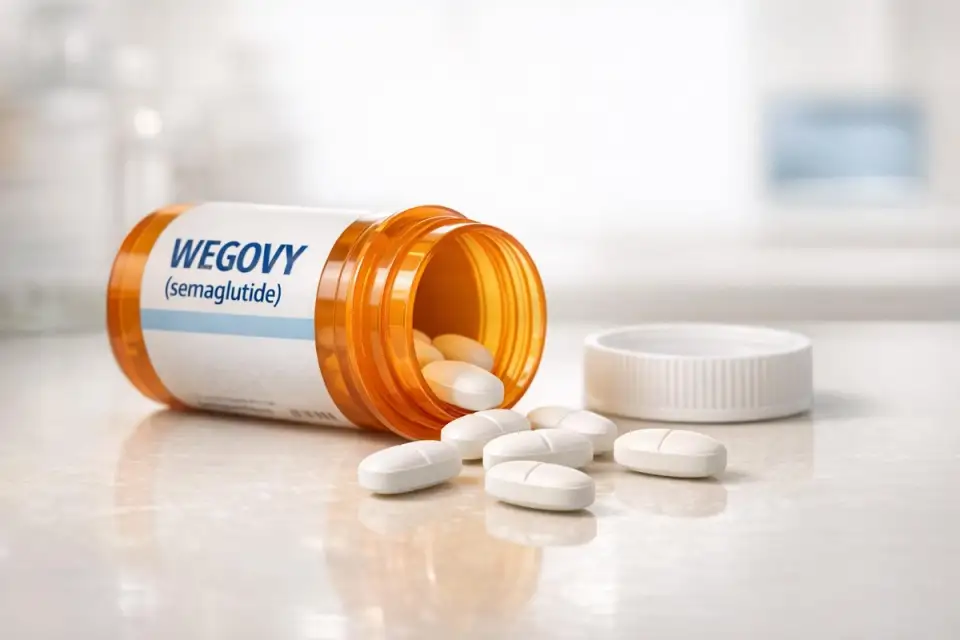

Wegovy injections have gained attention for their impressive weight-loss results, but many people wonder whether a Wegovy oral pill could deliver the same benefits without weekly shots. The question of whether swallowing a tablet works as effectively as an injection is important for anyone considering their treatment options. Understanding the differences between these delivery methods helps determine which approach might work best for individual weight loss goals.
Research shows significant differences in how oral and injectable forms of semaglutide perform in the body. Factors like absorption rates, dosing requirements, and effectiveness vary between the two options, making it essential to weigh the pros and cons of each approach. Tools like MeAgain's GLP-1 app can help track progress and manage the treatment journey regardless of which form you choose.
Summary
- The FDA-approved oral Wegovy tablet contains the same active ingredient as the injection (semaglutide) and achieves similar average drug levels in the body once you reach the full maintenance dose. Clinical trials showed oral Wegovy helped participants achieve up to 15% body weight loss, aligning with injectable outcomes. The difference isn't in strength but in how the medication enters your system and how often you take it.
- Bioavailability creates the most striking contrast between formats. The injection delivers roughly 89% of semaglutide into your bloodstream, while the oral pill achieves less than 1% absorption through the digestive tract. This explains why the daily pill requires a 25 mg dose compared to the weekly 2.4 mg injection, and why individual drug exposure levels can range from 27 to 186 nmol/L on the oral form versus a tighter 51 to 110 nmol/L range with injections.
- The oral tablet demands a strict morning protocol: take it on an empty stomach with no more than 4 ounces of plain water, then wait at least 30 minutes before eating, drinking anything else, or taking other medications. This non-negotiable routine maximizes absorption but creates daily friction that some patients find manageable and others find incompatible with real life. The injection has no timing restrictions around food or other medications.
- Both formulations are approved for weight loss in adults with obesity or overweight conditions and for reducing cardiovascular risk in adults with heart disease, but the injection extends approval to adolescents ages 12 and older and adults with metabolic dysfunction-associated steatohepatitis (MASH). The pill does not yet cover these populations, making format choice dependent on age and specific medical needs, not just personal preference.
- Adherence determines effectiveness more than delivery method. A medication you take consistently every day beats a more potent one you forget or abandon, which means matching the format to your actual lifestyle (not your ideal one) matters as much as pharmacological differences. Neither the daily pill nor the weekly injection is universally superior.
- MeAgain's GLP-1 app addresses this by tracking daily pill routines or weekly injection schedules, logging meals to monitor appetite suppression, and managing side effects as they emerge, regardless of which format you choose.
Table of Contents
- What Is the Wegovy Oral Pill, and Can It Really Match the Injection?
- 5 Key Differences Between Wegovy Pill vs. Injection for Weight Loss
- How to Use the Oral Pill for Real-World Weight Loss Success
- Turn Oral or Injected Wegovy into Real Results—Every Day
What Is the Wegovy Oral Pill, and Can It Really Match the Injection?
Wegovy does come in a pill form. In December 2025, the FDA approved Wegovy as an oral tablet containing the same active ingredient as the weekly injection: semaglutide. Both formats are approved for helping adults with obesity or overweight manage their body weight and for lowering the risk of major heart events in certain adults with heart disease and obesity. The tablet is not approved for weight management in children ages 12 or older or for treating metabolic dysfunction-associated steatohepatitis (MASH), unlike the injection.
"Both the oral tablet and weekly injection formats of Wegovy are approved for helping adults with obesity manage their body weight and lower cardiovascular risk." — FDA Approval, December 2025
Format | Active Ingredient | Pediatric Use | MASH Treatment |
|---|---|---|---|
Weekly Injection | Semaglutide | ✅ Ages 12+ | ✅ Approved |
Oral Tablet | Semaglutide | ❌ Not approved | ❌ Not approved |
What false belief prevents people from choosing the right treatment?
The most common misconception is that oral pills can't work as well as Wegovy injections. People assume injections are stronger because they enter the bloodstream directly, leading them to avoid oral options even when pills would better suit their lifestyle. This misunderstanding causes people to skip treatment or use a format incompatible with their routine.
How do oral and injectable Wegovy compare in effectiveness?
At full maintenance doses, semaglutide levels are similar between the Wegovy 25 mg daily tablet and the 2.4 mg weekly injection in adults. Both forms work identically and share the same mechanism of action. According to Medical News Today, clinical trials showed that oral Wegovy helped participants achieve up to 15% body weight loss, matching the outcomes of injectable Wegovy. The difference lies in the administration route and frequency, not potency.
How do daily pills fit into your routine?
A daily tablet can feel more routine, like taking a vitamin each morning, while a weekly injection is simpler if daily medications feel overwhelming. The right choice depends on which rhythm matches how you actually live. If you've ever started a daily habit with good intentions only to forget it by Thursday, you know this tension well.
Can you switch between pill and injection forms?
You can switch between Wegovy injection and the 25 mg tablet with medical supervision, but taking both forms simultaneously is not advisable. Your doctor will help you make a safe change if your needs or preferences shift. What works in month one may not work in month six, so the form that helps you stay consistent today is the right form for you.
What are the side effects and approved uses?
Side effects of Wegovy are similar for the tablet and injection forms since they contain the same drug. These may include vomiting, nausea, or diarrhoea. In clinical trials, severe gastrointestinal side effects and gallstones occurred in a small number of people taking both forms. The main difference lies in dosing frequency and how it fits into your daily life. For adults using Wegovy for weight loss or heart risk reduction, both the tablet and injection are approved options.
How should you choose between formats?
When choosing between formats, discuss your options with a licensed clinician. They'll review your health history, current medications, and preference for a weekly shot or daily pill. Our MeAgain GLP-1 app supports this decision-making process by tracking your progress, managing side effects, and keeping you informed about your semaglutide treatment, whether injectable or oral. Knowing the pill exists and understanding how it compares to the injection in real-world use are two different things.
Related Reading
- GLP-1 Oral Medications
- How Long Have GLP-1 Been Around
- Glp-1 Weight Loss Results
- Glp-1 Vs Semaglutide
- Oral Wegovy Vs Injection
- Is Oral Wegovy As Effective As Injection
- Wegovy Pill Vs Injection
- Orforglipron Phase 3
5 Key Differences Between Wegovy Pill vs. Injection for Weight Loss
Both versions of Wegovy contain semaglutide and work the same way through a GLP-1 receptor agonist mechanism: slowing gastric emptying, increasing satiety, and controlling appetite. According to WebMD, clinical trials showed that oral semaglutide helped people lose 15% of their body weight when taken as directed. The differences lie in how your body absorbs the medicine and how it fits into your everyday life.
"Clinical trials showed that oral semaglutide helped people achieve 15% weight loss when they took it as directed." — WebMD
Aspect | Wegovy Pill | Wegovy Injection |
|---|---|---|
Absorption Method | Through the digestive system | Direct subcutaneous delivery |
Bioavailability | Lower due to stomach acid | Higher, bypasses digestion |
Administration | Daily oral tablet | Weekly injection |
Convenience | ✅ Easy to take | ❌ Requires injection technique |
Effectiveness | 15% weight loss | 15-20% weight loss |
1. Absorption pathways create different bioavailability profiles
The injection puts semaglutide under your skin, where about 89% enters your bloodstream. The pill must pass through your digestive system, where less than 1% of the dose enters your blood. This is why the oral maintenance dose is 25 mg daily while the injection is 2.4 mg weekly: the higher pill dose compensates for lower absorption, not weaker strength. How much medicine your body uses varies considerably between people taking the pill form. Some patients experience drug exposure levels ranging from 27 to 186 nmol/L at the same dose, which can create unpredictable appetite suppression if their morning routine lacks consistency. The injection offers more stable exposure, with a tighter range of 51 to 110 nmol/L, providing predictable medication levels without requiring a rigid schedule.
2. Daily pills demand strict timing, while weekly injections offer flexibility
Take the oral pill first thing in the morning on an empty stomach with no more than 4 ounces of plain water. Wait at least 30 minutes before eating, drinking anything else, or taking other medications. Do not split, crush, or chew the tablet. This method improves pill absorption but requires a strict morning routine: some find the structure helpful for remembering to take it, while others struggle with the empty stomach and 30-minute waiting period. The injection has no timing restrictions around food or other medications. Choose one day each week and inject at any time that day. For someone who travels frequently, skips breakfast, or takes multiple morning medications, the weekly format removes friction. For someone who thrives on daily rituals and wants to avoid needles, the pill's structure may feel more manageable than remembering a weekly task.
3. Dose escalation schedules follow different timelines
Both formulations use gradual titration to reduce side effects. The injection reaches its maintenance dose in 17 weeks, starting at 0.25 mg weekly and increasing every four weeks: 0.5 mg, 1 mg, 1.7 mg, then 2.4 mg. The pill reaches maintenance in 90 days, starting at 1.5 mg daily and increasing monthly: 4 mg, 9 mg, then 25 mg. The escalation timeline matters because it gives your body time to adjust to stomach and digestive side effects. Daily dosing means your system processes semaglutide continuously during titration, while weekly dosing concentrates side effects into a 24 to 36-hour window after each injection. Some patients prefer managing nausea intermittently rather than potentially facing it daily, while others find daily low-level side effects easier to manage than intense post-injection periods.
4. Storage and portability requirements differ significantly
Injection pens must be refrigerated between 36°F and 46°F, though they can be stored at room temperature (46°F to 86°F) for up to 28 days. Pills can remain at room temperature but must stay in their original moisture-protective bottle. For frequent travellers or those without reliable refrigeration, this presents a significant challenge. Your choice depends on how you live: pills eliminate the need for cold storage when you travel, while injections' once-a-week schedule may suit those who prefer not taking medicine daily, despite requiring refrigeration. Neither option is easier to carry; it comes down to which storage requirement bothers you less.
5. FDA-approved uses cover different patient populations
Both forms are approved for weight loss in adults who are obese or overweight with at least one weight-related health condition, and both reduce cardiovascular risk (heart attack, stroke, cardiovascular death) in adults with heart disease. The injection extends approval to teenagers ages 12 and older for weight management and to adults with metabolic dysfunction-associated steatohepatitis (MASH) with liver scarring, whereas the pill does not cover these groups. If you're an adult choosing between formats for weight loss or cardiovascular risk reduction, both are approved options. If you're a parent exploring treatment for a teenager or have MASH, the injection is currently your only Wegovy option.
How do you choose the right format for your lifestyle?
The common thread across all five differences is that neither format is universally better. The injection offers predictable absorption, flexible timing, and broader approved uses. The pill eliminates needles, requires no refrigeration, and fits into a structured morning routine. Effectiveness depends as much on consistent adherence as on bioavailability. A medication you take every day beats a more potent one you forget or abandon.
Feature | Wegovy Pill (Oral Semaglutide) | Wegovy Injection (Subcutaneous Semaglutide) |
|---|---|---|
FDA-Approved Uses |
|
|
Route of Administration | Oral | Subcutaneous injection |
Dose Frequency | Daily | Weekly |
Dose Instructions |
|
|
Dosage Schedule | Days 1-30: 1.5 mg daily Days 31-60: 4 mg daily Days 61-90: 9 mg daily Days 91 and after: 25 mg daily | Weeks 1-4: 0.25 mg weekly Weeks 5-8: 0.5 mg weekly Weeks 9-12: 1 mg weekly Weeks 13-16: 1.7 mg weekly Weeks 17 and beyond: 2.4 mg weekly |
Storage | Keep tablets in their original container |
|
Platforms like MeAgain support adherence by tracking daily pill routines or weekly injection schedules, logging meals with AI to monitor appetite suppression, and managing emerging side effects. Sustainable success comes from matching the delivery method to your life, then using support systems to maintain that routine.
Related Reading
How to Use the Oral Pill for Real-World Weight Loss Success
Taking oral Wegovy the right way requires waiting 30 minutes after taking it before eating, drinking anything except plain water, or taking other medications. Track whether the pill reduces your appetite as intended. Watch for side effects like nausea or constipation, and adjust your diet to match your lower hunger rather than eating from habit or social pressure.
Timing Rule | Action Required | Why It Matters |
|---|---|---|
30 minutes before eating | Take the pill on an empty stomach | Maximizes absorption |
Plain water only | No other beverages/meds | Prevents interference |
Monitor appetite changes | Track hunger levels daily | Confirms medication is working |
Adjust eating habits | Eat based on hunger, not routine | Optimizes weight loss results |
"Patients who consistently follow the 30-minute rule and adjust their eating patterns to match reduced appetite see significantly better weight loss outcomes compared to those who don't modify their habits." — Clinical Weight Management Guidelines, 2024
What makes the morning protocol non-negotiable?
Take the oral tablet on an empty stomach with no more than 4 ounces of plain water, first thing in the morning. Don't eat, drink coffee, take vitamins, or swallow other medications for at least 30 minutes after. Food and other substances block semaglutide absorption in your digestive tract. If you take the pill at 7:00 a.m. but drink coffee at 7:15 a.m., you've wasted that day's dose.
How do you handle social pressure during the fasting window?
Cultural pressure complicates adherence to this protocol. Family members expecting shared breakfasts or coworkers offering morning coffee create situations where people abandon the plan. The 30-minute window seems manageable in theory, but becomes a daily negotiation with household routines. Setting phone alarms for pill time and the end of the fasting window helps, though only if you're willing to explain to others why you're not eating yet.
Why is tracking protein, fiber, and hydration essential for managing side effects?
Nausea and constipation are worst during the first three weeks as your body adjusts to slower stomach emptying. According to StatPearls, GLP-1 medications help patients lose 15% to 25% of their body weight, though results depend on effectively managing side effects to maintain regular use. Drinking adequate water throughout the day reduces the severity of constipation. Eating protein at each meal preserves muscle mass during weight loss, while fibre from vegetables supports digestion when stomach motility slows.
How can you track nutrition when appetite signals become unreliable?
The challenge isn't knowing you should drink more water; it's remembering to do it when appetite suppression makes thinking about food unpleasant. Tracking becomes essential because your body's hunger signals are no longer reliable guides. Apps that log meals, water intake, and daily symptoms help you identify patterns: did nausea worsen on days you skipped breakfast, or improve when you ate small amounts of protein every few hours?
Why don't non-scale victories matter more than weight?
Losing weight doesn't happen in a straight line. Some weeks you'll lose two pounds; other weeks the scale won't move despite following your plan perfectly. Non-scale victories matter more for sustaining motivation: clothes fitting differently, physical tasks becoming easier, mood improvements, and better sleep quality. These changes show the medication is working even when the scale stalls.
How should you handle comparing your progress to others?
Many patients feel guilty when results don't match others' timelines or worry when progress slows after an initial rapid weight loss. Comparing your week 12 to someone else's week 12 ignores that bodies respond differently based on starting weight, metabolic health, activity levels, and numerous other factors. The only meaningful comparison is your own baseline: how you feel now versus how you felt before starting treatment.
What tools help track comprehensive progress beyond weight?
Platforms like MeAgain support this reality by tracking protein intake, fibre, water consumption, exercise, and side effects over time. Comprehensive monitoring helps people stay consistent through inevitable stalls and setbacks. But knowing how to take the pill correctly and integrating it into a life that doesn't pause for perfect adherence are entirely different problems.
Turn Oral or Injected Wegovy into Real Results—Every Day
Oral or injected Wegovy works when you take it consistently and build sustainable habits. The medication reduces appetite and slows digestion, but results require tracking what you eat, staying hydrated, moving your body, and adjusting as side effects change. Success depends on integrating your chosen format into a routine you can maintain when motivation fades.
"Weight loss medications like Wegovy are most effective when combined with lifestyle modifications and consistent daily routines." — Clinical Weight Management Guidelines, 2024
Daily Success Factor | Why It Matters |
|---|---|
Consistent dosing | Maintains steady appetite control |
Food tracking | Maximizes medication effectiveness |
Hydration | Reduces side effects, supports digestion |
Regular movement | Accelerates weight loss results |
Track the habits that amplify medication effects
Protein intake matters because GLP-1 medications reduce overall hunger, and many people unconsciously cut protein first when their appetite drops. This leads to muscle loss alongside fat loss, which slows metabolism and increases the risk of weight regain once you stop treatment. Logging meals helps you see whether you're hitting 25 to 30 grams of protein per meal—your suppressed appetite won't remind you to eat enough of what your body needs. Fibre and water prevent constipation, one of the most common reasons people reduce their dose or quit entirely. Tracking these inputs daily converts vague intentions into visible patterns you can adjust. The same principle applies to exercise. Wegovy doesn't require you to work out, but movement preserves muscle mass and improves how your body uses the weight you lose. Gamified tracking transforms "I should exercise more" into "I walked 8,000 steps today and logged it." Small, measurable goals outperform ambitious plans abandoned by week three. When the routine feels less like discipline and more like visible progress, adherence stops being a matter of willpower.
Turn milestones into momentum with visible progress
Weight loss stalls happen to everyone. The scale might not move for two weeks, even when you're doing everything right. Non-scale victories keep you grounded: taking progress photos, noting improved energy, and celebrating the week you didn't need an afternoon nap. Capturing these moments reminds you that the medication is working even when the scale doesn't reflect it. Platforms like MeAgain support this by offering Journey Cards that document milestones, habit tracking that shows protein and fibre intake trends, and a capybara coach that makes daily goals feel playful rather than punishing. Zero-markup compounded semaglutide or tirzepatide, combined with day-to-day progress tools, means medication access and adherence support exist in one place. You're building a routine that turns treatment into measurable, sustainable change. Download MeAgain today and start tracking the habits that make oral or injected GLP-1 treatment work. The format matters less than the system you use to stay consistent when the journey gets difficult.