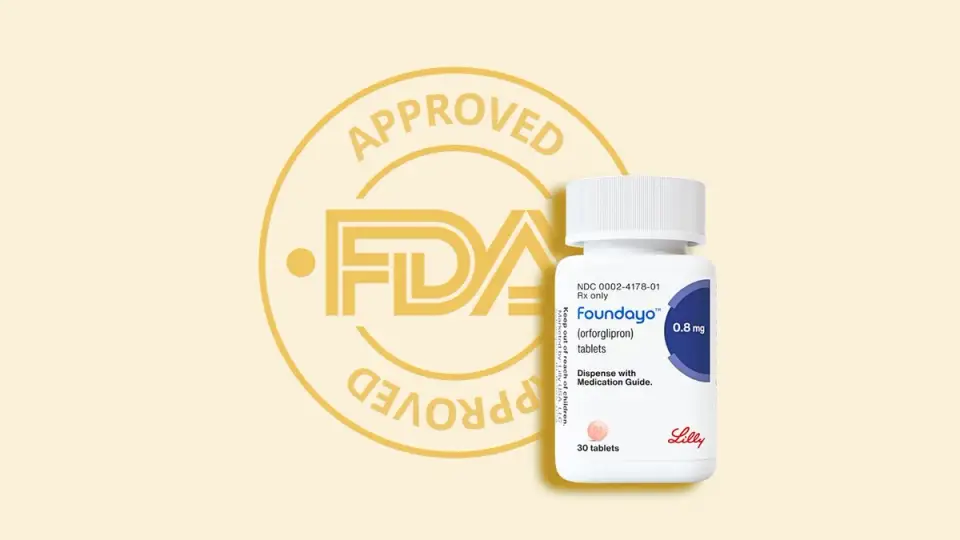

When considering a weight loss product like Foundayo, knowing who stands behind it matters more than you might think. The company's track record, manufacturing standards, and transparency can mean the difference between a product that delivers results and one that falls short or puts your health at risk. Understanding the manufacturer's credentials, production practices, and reputation helps you make an informed decision and avoid products from questionable sources.
Separating legitimate weight-loss solutions from ineffective ones requires careful research, but you don't have to navigate it alone. Verified information about manufacturers, ingredients, and clinical support gives you confidence in your choices while helping you avoid risky products that promise quick fixes without substance. For personalized guidance on safe, effective weight management strategies that align with your health goals, consider using MeAgain's GLP-1 app.
Summary
- Eli Lilly developed orforglipron over an eight-year timeline after licensing the molecule from Kotobuki Pharmaceutical in Japan in 2018. This extended development period included multi-phase clinical trials across thousands of participants before FDA submission, demonstrating deliberate scientific work rather than a rushed market response. The company's existing GLP-1 portfolio (Mounjaro and Zepbound) generated $13.9 billion in revenue during 2024, creating strong financial incentives to maintain credibility in this therapeutic category.
- Clinical trials showed Foundayo produces 11% average weight loss over 52 weeks, compared to 16-17% with competing oral GLP-1 options like the Wegovy pill. This lower efficacy creates a genuine trust tension for patients weighing convenience against proven performance. The medication received FDA approval in April 2025, which means real-world safety data remain limited to controlled trial settings and cannot predict how the drug performs across diverse patient populations in everyday life.
- Large pharmaceutical manufacturers face different risk profiles than startup biotech firms or compounding pharmacies. Eli Lilly operates 60 manufacturing facilities globally, each subject to unannounced FDA inspections, and employs thousands of pharmacovigilance staff who monitor adverse events and submit quarterly regulatory updates. This infrastructure creates accountability mechanisms that smaller companies cannot replicate, though it doesn't eliminate the unknowns inherent in any newly approved medication.
- Side effects occurred in 68% of trial participants, sitting within the expected range for GLP-1 medications but representing best-case scenarios with close monitoring and immediate medical support. Real-world experiences managing nausea, constipation, and other effects without research coordinators available will differ from what clinical trial data suggests. The first two years of post-market use typically reveal rare adverse effects that even large trials miss.
- Foundayo costs approximately $1,200 monthly without insurance, though manufacturer savings programs aim to reduce out-of-pocket expenses to $149-$299 for eligible patients. Financial access alone doesn't resolve the uncertainty of choosing a medication without years of post-market surveillance across diverse populations. Risk tolerance varies legitimately; some people prioritize convenience and novelty, while others prefer medications with established real-world safety profiles spanning multiple years.
- MeAgain's GLP-1 app addresses adherence challenges by tracking daily protein, hydration, and movement goals in one system, helping users maintain the consistent habits that determine whether GLP-1 treatment produces sustainable results or becomes another abandoned attempt.
Table of Contents
- Who Actually Makes Foundayo — And Why Does That Matter for You?
- Can You Trust the Company Behind Foundayo?
- Should You Trust Foundayo — Or Wait?
- Turn Your GLP-1 Results Into Something You Can Actually Stick To
Who Actually Makes Foundayo — And Why Does That Matter for You?
Eli Lilly and Company makes Foundayo. For a drug approved weeks ago with no long-term real-world data yet, the manufacturer's track record matters as much as how the drug works.

"When evaluating newly approved medications, the pharmaceutical company's history of drug development and post-market safety monitoring becomes a critical factor in treatment decisions." — FDA Drug Evaluation Guidelines

What is Eli Lilly's experience with GLP-1 medications?
Eli Lilly already makes Mounjaro (for diabetes) and Zepbound (for weight loss), both using tirzepatide with proven safety records and millions of patient-years of real-world use. Foundayo represents the company's entry into oral GLP-1 therapy, using orforglipron—a molecule licensed from a Japanese pharmaceutical firm in 2018. The eight-year development timeline reflects careful scientific work rather than a rushed competitive response.
How does orforglipron differ from existing treatments?
Orforglipron works differently from tirzepatide. As a small molecule, it absorbs quickly without food or drink restrictions, unlike Novo Nordisk's Wegovy pill, which requires patients to wait 30 minutes before eating or drinking. According to CNBC, FDA approval took nearly three months under the Commissioner's National Priority Voucher program, compared to the traditional timeline of January 2027.
What makes the clinical trial results concerning?
Clinical trials showed Foundayo helps people lose an average of 11% of their body weight (about 25 pounds) over more than a year, compared to 5.3 pounds with a placebo. This is less than the 16-17% weight loss seen with the Wegovy pill. Side effects mirror other GLP-1 medications: nausea, constipation, vomiting, diarrhoea, and indigestion, plus a rare but serious thyroid cancer risk. These risks lack the reassurance of years of real-world safety data.
Why are patients hesitant about early adoption?
People considering GLP-1 options often worry about being early adopters when their health is at stake. Lilly built $1.5 billion in inventory before approval and positioned Foundayo as a "foundational" therapy with "broad ambitions" for additional indications, such as sleep apnea and hypertension. That confidence may reassure some, but others see aggressive expansion plans for a new drug and question whether speed is overtaking caution.
How do you weigh efficacy against company reputation?
Choosing a weight loss medication depends on efficacy, side effects, and the manufacturer's reputation. Eli Lilly's established GLP-1 presence provides reassurance, while Foundayo's newness and lower effectiveness compared to competitors create genuine tension. The company's openness about clinical trial data and pricing ($149–$299 monthly, depending on insurance and dose) suggests accountability, though only time will reveal how this medication performs across diverse patient populations.
Who should consider this medication option?
For people already using injectable GLP-1s or avoiding treatment because of injection stigma, Foundayo offers a potentially useful option. For others, waiting for more real-world evidence may be the smarter choice. Platforms like MeAgain's GLP-1 app help you track your medication journey, monitor your progress, and make informed decisions about which GLP-1 option matches your health goals and risk tolerance. The app's zero-markup pricing model and comprehensive tracking tools support whatever choice you make, without promoting the newest option simply because it exists. Company reputation tells only part of the story when evaluating this new medication.
Related Reading
- What is Foundayo
- How Is Foundayo Different From Zepbound?
- Which Is Better: Foundayo Or Oral Wegovy?
- How Can I Get Foundayo?
Can You Trust the Company Behind Foundayo?
How did Eli Lilly develop orforglipron over eight years?
Eli Lilly spent eight years developing orforglipron after licensing the molecule from Kotobuki Pharmaceutical in Japan in 2018, then ran multi-phase clinical trials across thousands of patients before filing for FDA approval. Phase 1 trials test safety in small groups, while Phase 2 expands to hundreds of participants to evaluate dosing and side effects. Phase 3 involves thousands of people across diverse populations to confirm efficacy and identify rare adverse events. Companies that rush this process face regulatory rejection, lawsuits, and reputational damage.
What financial stake does Lilly have in GLP-1 credibility?
Lilly's existing GLP-1 portfolio generated $13.9 billion in revenue in 2024, with prescriptions for Mounjaro and Zepbound increasing 77% year-over-year. This revenue demonstrates the company's substantial stake in maintaining its reputation in this therapeutic area. With income dependent on physician prescriptions and patient trust, cutting corners would undermine financial interests.
How do regulatory agencies treat different drug manufacturers?
Regulatory agencies like the FDA don't treat all drug makers the same way. Companies with a long history undergo the same careful approval process, but their experience, manufacturing infrastructure, and post-approval safety monitoring systems create risk levels different from those of new biotech companies. Lilly operates 60 manufacturing facilities globally, each subject to unannounced FDA inspections, and employs thousands of pharmacovigilance staff who monitor adverse event reports, analyze safety signals, and submit quarterly updates to regulators. This infrastructure doesn't eliminate risk but creates accountability systems that smaller companies cannot replicate.
Why do compounding pharmacies face different oversight than established companies?
Compounding pharmacies create customized formulations outside the traditional approval pathway, allowing faster market access but bypassing the multi-phase trials that caught Foundayo's rare side effects before widespread use. A new drug from an unknown laboratory versus one from a company that has delivered millions of GLP-1 prescriptions represents fundamentally different risk profiles, not because large companies are inherently more ethical, but because they face greater financial consequences when safety issues emerge.
What doesn't credibility guarantee about new medications?
Lilly's track record doesn't erase Foundayo's newness. Approved in April 2025, real-world data remain limited to clinical trials, which showed an average 11% weight loss over 52 weeks. Trials can't predict performance in everyday life: people skip doses, take undisclosed medications, and have conditions underrepresented in trial populations. The first two years after approval typically reveal rare side effects that trials miss.
How does transparency affect medication choices?
Lilly's openness about this limitation builds trust. The prescribing information clearly states that Foundayo's long-term heart and blood vessel outcomes haven't been established, unlike Wegovy, which showed reduced risk of heart attack and stroke in extended trials. Choosing a weight loss medication requires accepting tradeoffs between proven results, convenience, cost, and unknowns. Corporate reputation doesn't eliminate those tradeoffs. But knowing who makes your medication matters only if you understand what happens when things go wrong.
Related Reading
- Foundayo Side Effects
- How Is Foundayo Different From Zepbound?
- Which Is Better: Foundayo Or Oral Wegovy?
- How Can I Get Foundayo?
What does trust mean when evaluating new medications?
Trust means understanding what you're accepting when you choose a medication approved weeks ago versus one with years of real-world safety data. Foundayo uses orforglipron, a molecule structurally different from semaglutide or tirzepatide. That difference matters because your body's response to a new drug class cannot be fully predicted by clinical trials alone.
How do trial conditions differ from real-world use?
According to the FDA safety review, 68% of trial participants experienced at least one side effect, which is expected with GLP-1 medications. However, trial participants receive close monitoring and immediate medical support. Experiencing nausea while working full-time or managing constipation without a research coordinator to call differs significantly from what the trial data suggests.
What situations favor starting Foundayo immediately?
Start Foundayo right away if fear of needles has prevented you from trying GLP-1 therapy. Oral medication removes that barrier. You might also start now if you've accepted the trade-offs: the 11% average weight loss is lower than that of injectable options, and long-term heart health outcomes remain unknown. Some people like being early adopters when they trust the drug class and manufacturer.
How do cost considerations affect the decision?
The medication costs around $1,200 per month without insurance. However, Lilly's savings programs can reduce that cost to $149–$299 for qualifying patients. If your insurance covers it and you can manage out-of-pocket costs, affordability becomes less of a concern. Cost alone doesn't answer the question of choosing a medication without years of public use data after approval.
When Waiting Protects You Better
You might delay starting Foundayo if you prefer medications with established real-world safety profiles. Clinical trials cannot capture every rare adverse event, especially those appearing after extended use or in underrepresented populations. Waiting 12–24 months allows the medical community to observe how Foundayo performs outside controlled settings and identify patterns trials missed. Risk tolerance varies legitimately across individuals. Some accept unknowns for convenience or novelty; others prioritize proven track records. Neither approach is wrong, but pretending the choice involves no real tradeoffs creates false confidence that serves no one's health interests.
Why does your adherence matter more than the manufacturer's?
Results don't come from Eli Lilly's reputation—they come from how consistently you take the medication, how you manage side effects, and whether you build sustainable habits around treatment. The difference between "this drug works" and "this drug worked for me" depends entirely on what happens after you fill the prescription.
How can you track your treatment success?
Platforms like MeAgain's GLP-1 app help you track medication adherence, monitor side effects, and identify early signs of how Foundayo works with your body, without additional charges. The manufacturer's good reputation only gets you to the pharmacy. What happens next determines whether that prescription becomes a success story or another failed attempt.
Related Reading
- How Can I Get Foundayo?
- What is Foundayo
- How Is Foundayo Different From Zepbound?
- Which Is Better: Foundayo Or Oral Wegovy?
Turn Your GLP-1 Results Into Something You Can Actually Stick To
Starting a GLP-1 medication takes one decision. Staying consistent requires hundreds of small decisions every day. Miss your protein targets, and you risk losing muscle mass alongside fat. Skip adequate hydration, and side effects like constipation worsen. Break your routine for days, and progress stalls. The gap between "this medication works" and "it worked for me" lives in what happens after you fill the prescription.

Most people don't quit GLP-1 medications because the drugs failed. They quit because maintaining the daily habits that make the medication effective feels overwhelming. You're managing injection schedules, tracking macros, monitoring side effects, adjusting portions, and distinguishing between normal adjustment periods and genuine problems. That cognitive load compounds week after week until consistency breaks.
"The gap between medication effectiveness and personal success happens entirely in daily habit management, not in the prescription itself."
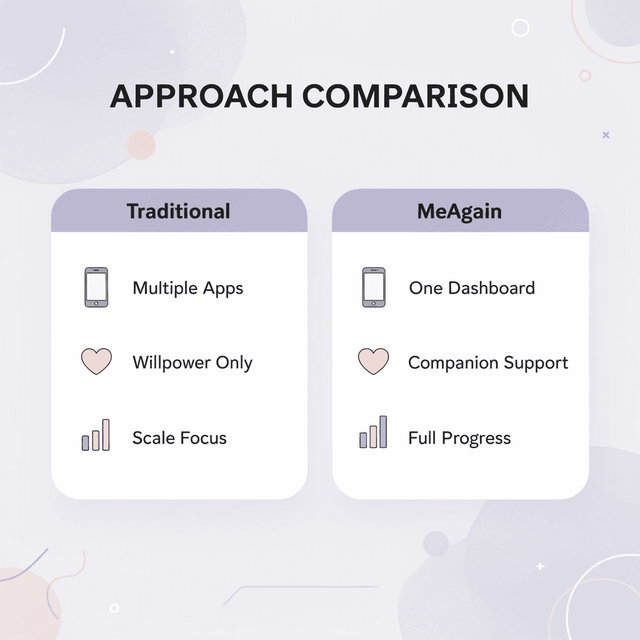
Platforms like MeAgain's GLP-1 app turn consistency from a willpower challenge into a system you enjoy using. The app helps you track daily protein, fibre, water, and movement goals in one place. Your capybara companion keeps you engaged through the repetitive middle weeks when motivation fades, while your Journey Card captures every milestone so you see progress beyond the scale.
Challenge | Traditional Approach | MeAgain Solution |
|---|---|---|
Tracking Multiple Metrics | Separate apps/spreadsheets | All-in-one dashboard |
Motivation Drops | Rely on willpower | Capybara companion engagement |
Progress Visibility | Scale-only focus | Journey Card milestones |
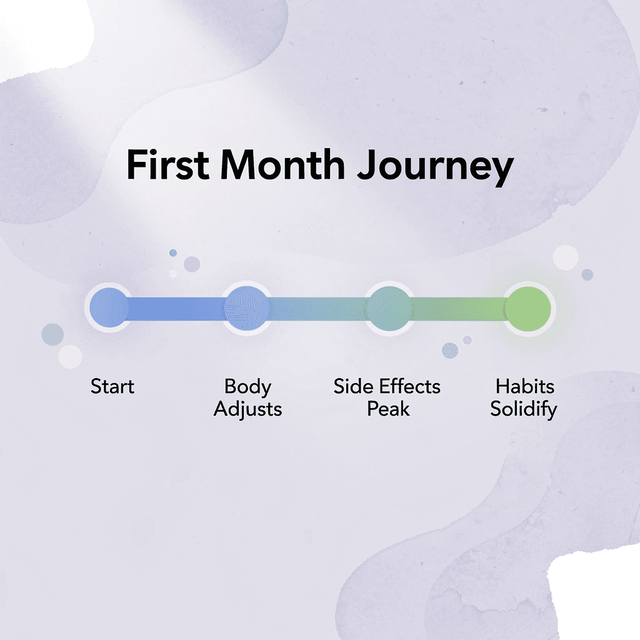
The first 30 days determine whether your GLP-1 treatment becomes sustainable or another abandoned attempt. That's when your body adjusts, side effects peak, and habits either solidify or fracture. You need visibility into what's working and what's creating friction before patterns harden.
Your results depend less on which GLP-1 medication you choose and more on whether you build a support structure that makes daily consistency feel automatic instead of exhausting. Download MeAgain and create a system to help you stay on track long enough to see the results you set out to achieve.