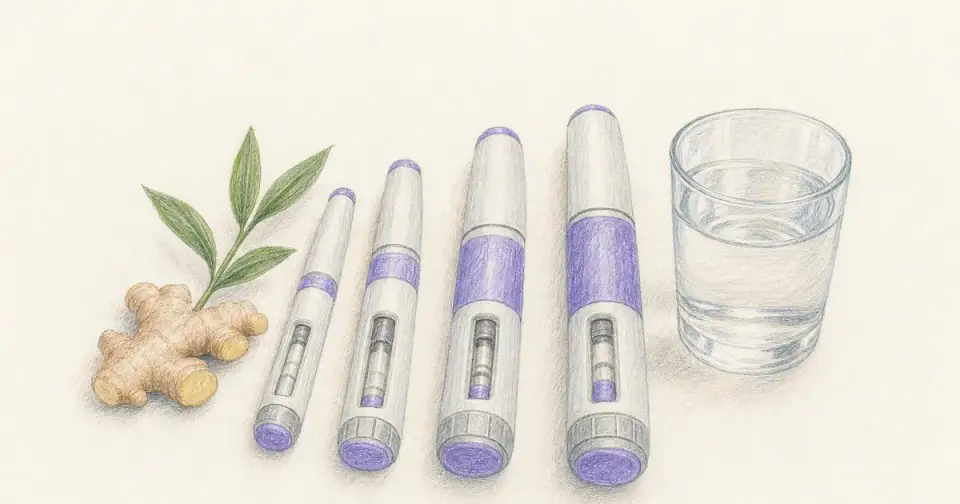

You've started a GLP-1 medication for weight loss or diabetes management, and now you're staring at your prescription, wondering if you're doing it right. Getting GLP-1 dosing correct isn't just about following label instructions. It's about understanding how titration schedules work, why weekly injections matter, and what happens when you miss a dose or experience side effects that make you question whether to continue. This guide breaks down everything you need to know about proper dosing protocols, adjustment periods, and how to work with your healthcare provider to find the sweet spot where medication effectiveness meets tolerability.
That's where the MeAgain GLP-1 app becomes your personal dosing companion. Instead of second-guessing your injection schedule or wondering if nausea means you should skip your next dose, you get clear guidance tailored to your specific medication, whether it's semaglutide, tirzepatide, or another GLP-1 receptor agonist. The app tracks your dosing timeline, sends reminders so you never miss your weekly administration, and helps you monitor symptoms so you can have informed conversations with your doctor about dose escalation or staying at your current level.
Summary
- GLP-1 medications require personalized dosing because metabolic responses vary dramatically between individuals. About 50% of people don't respond optimally to standard protocols, often because the dosing doesn't match their metabolic profile. Someone managing PCOS or thyroid dysfunction processes these medications differently than someone without endocrine conditions, and pushing doses too quickly creates severe nausea that leads to treatment discontinuation rather than faster results.
- Starting doses are deliberately low to allow the digestive system to adapt, not to initiate weight loss. Semaglutide typically begins at 0.25 mg weekly, while tirzepatide starts at 2.5 mg weekly. These introductory doses give your gastrointestinal tract time to adjust to slower gastric emptying before therapeutic levels kick in. Skipping this adaptation period or rushing to higher doses amplifies side effects to the point where many people abandon treatment entirely.
- The four-week titration window exists because your body needs time to stabilize multiple physiological systems. GLP-1 medications stretch normal stomach emptying time from two to four hours to six or eight hours. Your gut motility patterns, brain satiety signals, and pancreatic insulin secretion all require recalibration. Clinical trial data shows 25% of participants experienced nausea, but the severity varied dramatically based on titration speed, with faster escalation causing persistent symptoms lasting weeks.
- Inadequate protein intake during GLP-1 therapy accelerates muscle loss because appetite suppression makes eating feel like a chore. Most people need 80 to 120 grams of protein per day during weight loss to preserve lean tissue, but once hunger subsides, they naturally gravitate toward easier-to-tolerate carbohydrates. Without adequate protein and resistance training two to three times weekly, the body breaks down muscle for metabolic fuel rather than prioritizing fat loss.
- Missing doses disrupts steady-state drug levels and requires specific catch-up protocols. Semaglutide formulations allow different windows (Ozempic five days, Wegovy two days), while tirzepatide gives four days. Beyond these windows, you skip the missed dose entirely rather than doubling up, because your body has started adapting to lower drug levels. Taking two doses close together triggers severe gastrointestinal distress similar to initial titration side effects.
- Higher maintenance doses don't guarantee better outcomes if side effects become unbearable. A patient consistently taking 0.5 mg semaglutide weekly without side effects will likely see better long-term results than someone who escalates to 2.4 mg but skips injections regularly because they feel terrible. The dose you can sustain comfortably over months beats the theoretical optimal dose you can't tolerate.
- MeAgain's GLP-1 app addresses this by tracking dosing timelines, protein intake, and symptom patterns in real time, creating concrete data that shows how your body responds at each dose level, rather than relying on vague recollections during medical appointments.
Why GLP-1 Dosing Isn’t “One Size Fits All” (And Why That Matters)

Most people assume GLP-1 dosing is simple: follow the pen instructions, increase every month, and the weight comes off. But that belief treats your body like a machine with predictable outputs. In reality, your metabolism, medical history, and even your stress levels shape how your body responds to these medications. What works perfectly for someone else might leave you nauseous for days or stalled at a frustrating plateau.
The consequences of ignoring this individuality show up fast. Push the dose too quickly, and you're fighting severe nausea that makes you dread your injection day. Stay too conservative, and you watch weeks pass with minimal progress, wondering if the medication even works. The difference between effective treatment and a miserable experience often comes down to understanding that GLP-1 dosing requires the same personalization as any other hormonal therapy. Your body isn't following a textbook protocol, and your dosing strategy shouldn't either.
Why your body processes GLP-1 differently from everyone else's
Some patients are what clinicians call "super-responders." They see significant appetite suppression and steady weight loss at doses that barely register for others. These individuals might need only half the standard maintenance dose to achieve their goals. Meanwhile, others require full therapeutic doses or even higher to see the same metabolic shifts. This isn't about willpower or commitment. It's biology.
Your baseline insulin resistance changes everything. If you're managing PCOS or thyroid dysfunction, your body's relationship with glucose regulation differs fundamentally from someone without these conditions. The medication works through the same receptor pathways, but the downstream effects vary based on what else is happening in your endocrine system. Research published in Aging Clinical and Experimental Research demonstrates how underlying metabolic conditions require adjusted approaches to achieve comparable outcomes.
The same dose that helps one person feel satisfied after smaller meals might leave another person feeling no different. This explains why rigid, protocol-driven dosing often fails. Your doctor isn't being overly cautious when they suggest starting at a lower dose or moving more slowly through titration. They're accounting for variables that don't show up on a standard prescription label.
When side effects signal the need for adjustment
Gastrointestinal distress isn't just an inconvenience you power through. Persistent nausea, vomiting, or severe constipation indicates that your body needs time to adapt or that the dose escalation occurred too quickly. According to an article on personalized obesity care, about 50% of people don't respond optimally to standard GLP-1 protocols, often because the dosing doesn't match their metabolic profile.
Starting at a customized lower dose gives your system space to adjust. Your gut needs to recalibrate how it processes food, and your brain needs to register new satiety signals. Rushing this process doesn't speed up results. It creates misery that makes people quit treatment entirely, convinced the medication "doesn't work for them" when the real issue was pacing.
Platforms like MeAgain help you track these patterns in real time. Instead of relying on memory during a brief doctor's visit, you document exactly when nausea hits, how your energy shifts throughout the week, and whether specific foods trigger worse symptoms. This data transforms vague complaints into actionable insights your physician can use to fine-tune your protocol.
Why weight loss plateaus demand dosage reconsideration
Your body adapts. After months at the same dose, the initial metabolic response often diminishes. You're still taking your weekly injection, following the same routine, but the scale stops moving. This plateau frustrates people who assume they've hit their "natural limit" or that the medication has stopped working. Neither is usually true.
What's actually happening is metabolic compensation. Your body has adjusted to the current level of GLP-1 receptor activation. The appetite suppression that felt dramatic at first becomes your new baseline. To continue progressing, you need either a dose adjustment or a strategic pause to reset sensitivity. This is why physician-guided titration matters more than the printed escalation schedule.
Some people benefit from microdosing strategies that keep doses lower but adjust them more frequently based on response. Others need to increase maintenance doses to overcome adaptive resistance. The critical difference is monitoring and adjustment based on what your body is actually doing, not what the average patient in a clinical trial experienced.
How medical history shapes your optimal protocol
Your cardiovascular health, kidney function, and history with other medications all influence how you should approach GLP-1 therapy. Someone managing hypertension alongside obesity needs careful monitoring as doses increase, because these medications affect blood pressure regulation. The goal isn't just weight loss. It's a sustainable metabolic improvement that doesn't create new problems while solving old ones.
Past experience with other weight-loss attempts also matters. If you've cycled through multiple diets or medications, your metabolic response might be blunted compared to someone starting their first intervention. This doesn't mean GLP-1 therapy won't work. It means your pathway to results requires more nuanced calibration.
Safety comes from gradual, medically supervised titration that accounts for your complete health picture. Rapid dose escalation in pursuit of faster results often backfires. You might lose weight quickly in the short term, but if side effects become unbearable or you develop complications, you end up stopping treatment before reaching your goals. Slow and steady isn't just safer; it's also more effective. It's more effective in the long term because it's sustainable.
What personalized dosing actually looks like in practice
Forget the idea of following a rigid monthly schedule printed on a chart. Real personalization means your doctor might hold you at a starting dose for six weeks instead of four if side effects are significant. Or they might escalate faster if you're tolerating the medication beautifully but not seeing adequate appetite suppression.
Some physicians incorporate symptom tracking between visits, asking you to rate nausea, energy levels, and hunger on specific days post-injection. This creates a response profile that guides decisions. If you consistently feel terrible on days two and three after your shot, that's valuable information. Maybe splitting to twice-weekly dosing would smooth out the peaks and valleys. Maybe the current dose is simply too high for your metabolism.
The conversation shifts from "are you following the protocol?" to "how is your body responding, and what does that tell us about next steps?" This approach treats you as an active participant in your care rather than a passive recipient of standardized instructions. You're not just tracking for compliance. You're gathering data that shapes your unique treatment path.
But understanding personalization is only half the equation. The other half is knowing where everyone actually starts.
Related Reading
- GLP1 Benefits
- Do You Have to Take Wegovy Forever
- GLP-1 vs Ozempic
- Can Ozempic Cause Blood Clots
- Why Do Glp1 Cause Nausea
- Titrating Medication Examples
- 503a vs 503b
- How To Qualify For Glp-1
- Glp 1 Compounding Pharmacy
- Oral Wegovy Dosing
- Can You Take Semaglutide Every Other Week For Weight Loss
- Tirzepatide Maintenance Dose
- How Old Do You Have To Be To Take Ozempic
- Does Mounjaro Show Up In Blood Work
- How To Ask Your Doctor For Weight Loss Injections
- Can A Pcp Prescribe Weight Loss Medication
- Glp-1 Cost With Insurance
- Can I Ask My Doctor For Weight Loss Medication
- How Long Does Tirzepatide Take To Work
- Microdosing Glp 1
- 503a Pharmacy Tirzepatide
- Cost Of Oral Wegovy
- Tirzepatide Compound Cost
- Best Place To Get Semaglutide
What Is the Typical Starting Dose for GLP-1 Medications?

Starting doses for GLP-1 medications are deliberately low, not to initiate weight loss, but to allow your digestive system to tolerate the medication without overwhelming side effects. According to Ivím Health, semaglutide typically begins at 0.25 mg once weekly, while Straight Healthcare's GLP-1 dosing guidelines note that some protocols start at 0.75 mg once weekly, depending on the specific formulation. These introductory doses serve one primary purpose: giving your body time to adapt before therapeutic levels kick in.
The first injection won't trigger dramatic appetite changes or rapid weight loss. That's intentional. Your gastrointestinal tract needs to adjust to slower gastric emptying, and your brain's satiety centers require time to recalibrate. Skipping this adaptation period or rushing to higher doses amplifies nausea, vomiting, and abdominal discomfort to the point where many people abandon treatment entirely, convinced the medication is unbearable.
Comparison of GLP-1 Dosing Schedules and Typical Outcomes
Here is a side-by-side look at the most commonly prescribed GLP-1 receptor agonists:
Medication | Starting Dose & Duration | Maintenance Dose Options | Average HbA1c Reduction | Average Weight Loss (kg) at 1 Year | Typical Time to Reach Max Dose | Common Reason to Stay on Lower Dose |
|---|---|---|---|---|---|---|
Trulicity (dulaglutide) | 0.75 mg × 4 weeks | 1.5 mg, 3.0 mg, 4.5 mg | 0.7–1.9% | 2–7 kg | 12–20 weeks | Good control + tolerable side effects |
Ozempic (semaglutide inj) | 0.25 mg × 4 weeks → 0.5 mg × 4 weeks | 0.5 mg, 1 mg, 2 mg | 1.0–2.0% | 4–10 kg | 12–20 weeks | Tolerability concerns during titration |
Mounjaro / Zepbound (tirzepatide) | 2.5 mg × 4 weeks | 5 mg, 7.5 mg, 10 mg, 12.5 mg, 15 mg | 1.6–2.4% | 7–15 kg | 16–24 weeks | Stronger effects but more GI intensity |
Victoza (liraglutide) | 0.6 mg daily × 1 week → 1.2 mg daily × 1 week | 1.2 mg or 1.8 mg daily | 0.8–1.5% | 2–6 kg | 2–4 weeks | Daily dosing preferred by some |
Rybelsus (oral semaglutide) | 3 mg daily × 30 days → 7 mg daily × 30 days | 7 mg or 14 mg daily | 0.9–1.5% | 3–6 kg | 60 days | Oral preference, no injection |
Semaglutide dosing: Wegovy and Ozempic
Wegovy injections follow a structured escalation path. You start at 0.25 mg weekly for four weeks, then move to 0.5 mg for another four weeks. From there, the progression continues through 1.0 mg, then 1.7 mg, with each level maintained for a month before advancing. The maintenance dose sits at 2.4 mg weekly, though not everyone reaches or needs this level.
The oral tablet version of Wegovy operates differently. It begins at 1.5 mg daily for 30 days, increases to 4 mg daily for the next month, then 9 mg daily, before reaching a 25 mg daily maintenance dose. Oral formulations require higher doses because absorption through the digestive tract is less efficient than subcutaneous injection.
Ozempic, which uses the same active ingredient for diabetes management, follows a similar pattern. It starts at 0.25 mg weekly for four weeks, then increases to 0.5 mg, then to 1.0 mg, with an optional step-up to 2.0 mg if glucose control or weight-loss goals haven't been met. The intervals remain consistent: four weeks at each level unless side effects demand a slower pace.
Tirzepatide dosing: Mounjaro and Zepbound
Tirzepatide begins at 2.5 mg weekly for four weeks. This dual GLP-1 and GIP receptor agonist typically produces stronger effects than semaglutide alone, which is why even the starting dose can feel more potent. After the initial month, you move to 5 mg weekly, then potentially escalate through 7.5 mg, 10 mg, 12.5 mg, and up to 15 mg depending on response and tolerability.
Each increase happens in 2.5 mg increments, spaced four weeks apart. The maintenance dose varies widely. Some people achieve excellent results at 5 mg and stay there indefinitely. Others require 10 mg or higher to see comparable appetite suppression and metabolic shifts. This variability underscores why cookie-cutter protocols fail.
Why gradual titration matters more than speed
GLP-1 medications slow the rate at which food leaves your stomach. When this happens too abruptly, your digestive system rebels. Nausea becomes constant, meals feel impossible to finish, and the thought of your next injection fills you with dread. Gradual titration gives your gut time to recalibrate motility patterns without triggering severe distress.
The escalation period also lets your doctor assess glucose response and weight trends at each dose level. If your HbA1c drops into target range on 0.5 mg of semaglutide and you're losing weight steadily without side effects, there's no reason to increase the dose just because the protocol recommends it. Conversely, if you're tolerating 1.0 mg beautifully but your appetite remains unchanged, and weight loss has stalled, moving to 1.7 mg or 2.0 mg makes sense.
Most schedules use four-week intervals because clinical trials demonstrated this timing balances efficacy with tolerability. Your doctor might extend the duration to six or eight weeks if nausea persists, or shorten it to three weeks if you're experiencing no side effects and need a stronger metabolic effect. The calendar matters less than your body's actual response.
When higher doses don't mean better outcomes
Pushing to maximum doses when side effects are already severe doesn't accelerate results. It creates misery that leads to treatment discontinuation. If you're struggling with persistent nausea at 1.0 mg semaglutide, jumping to 1.7 mg won't suddenly make things easier. It will likely make you feel worse and undermine your ability to stay consistent with injections.
Some people achieve their weight loss goals at doses well below the standard maintenance level. Their appetite suppression kicks in early, they adapt quickly, and lower doses deliver all the metabolic benefit they need. Staying at that level long-term is perfectly valid. Higher doses carry no inherent advantage if you're already seeing results and tolerating treatment well.
Adherence matters more than dose strength. A patient who consistently takes 0.5 mg semaglutide weekly without side effects will likely see better long-term outcomes than someone who escalates to 2.4 mg but skips injections regularly because they feel terrible. The dose that you can sustain comfortably over months beats the theoretical "optimal" dose you can't tolerate.
Tools like MeAgain help you document side effect patterns, energy fluctuations, and appetite changes across dose levels. Instead of relying on vague recollections during brief medical appointments, you bring concrete data showing exactly how your body responded at each step. This transforms dosing decisions from guesswork into evidence-based adjustments tailored to your metabolism.
Who decides when to increase your dose
Your healthcare provider determines escalation timing based on multiple factors: how well you're tolerating the current dose, whether you're meeting glucose or weight-loss targets, and your tracked symptoms. This isn't a decision you make alone, and it's not dictated purely by the calendar.
If HbA1c remains above your personalized target after eight weeks at a given dose, it indicates the need to increase the dose. If fasting glucose readings stay boosted despite consistent medication use, moving up makes sense. If weight loss has completely stalled for six weeks and appetite suppression has diminished, a higher dose might reignite progress.
But tolerability always guides the decision more than timelines. Moderate to severe nausea that persists beyond the first few weeks at a dose means your body needs more time to adapt, or possibly that you've reached your personal ceiling. Some patients never tolerate doses above 1.0 mg semaglutide, and that's fine. The goal is sustainable metabolic improvement, not hitting arbitrary dose targets.
Your tracked data becomes the conversation starter. When you can show your doctor that nausea peaks on days two and three post-injection, or that energy crashes consistently at certain dose levels, they can make informed adjustments. Maybe splitting to twice-weekly dosing smooths out the peaks. Maybe holding at the current dose for another month allows full adaptation. The specifics matter, and tracking captures them.
What happens when you reach the maintenance dose
Maintenance doesn't mean you're done adjusting. Your body continues adapting, and metabolic needs shift as you lose weight. Some people find that their initial maintenance dose becomes too strong as their body composition changes, requiring a step down to avoid excessive side effects. Others discover they need periodic increases to overcome adaptive resistance when weight loss plateaus.
The maintenance phase is about finding your sustainable equilibrium. That might be 1.0 mg semaglutide for years, or it might involve cycling between 1.7 mg and 2.4 mg based on how your body responds over time. There's no universal endpoint because your metabolism isn't static.
Regular monitoring continues even after you've settled into a consistent dose. Quarterly check-ins allow your doctor to assess whether the current level still serves your goals or whether adjustments would optimize outcomes. This ongoing calibration keeps treatment effective rather than letting it become a stale routine that stops delivering results.
But knowing the standard starting points and escalation paths is just the foundation. The real complexity emerges when those protocols meet the unpredictable reality of how your specific body responds.
Related Reading
- Can You Take Semaglutide Every Other Week For Weight Loss
- Tirzepatide Maintenance Dose
- How Old Do You Have To Be To Take Ozempic
- Does Mounjaro Show Up In Blood Work
- How To Ask Your Doctor For Weight Loss Injections
- Can A Pcp Prescribe Weight Loss Medication
- Glp-1 Cost With Insurance
- Can I Ask My Doctor For Weight Loss Medication
- How Long Does Tirzepatide Take To Work
- GLP1 Benefits
- Can Ozempic Cause Blood Clots
- Over-the-counter Peptides For Weight Loss
- Glp 1 Compounding Pharmacy
- Oral Wegovy Dosing
- Microdosing Glp 1
- 503a Pharmacy Tirzepatide
- Cost Of Oral Wegovy
- Tirzepatide Compound Cost
- Best Place To Get Semaglutide
How GLP-1 Dosing Progression Works (And What Can Go Wrong)

The titration schedule exists because your digestive system needs time to adapt to fundamentally different signals. According to Levels' GLP-1 research update, dose escalation occurs every 4 weeks to balance metabolic impact with tolerability. Your gut learns to process food more slowly, your brain recalibrates hunger cues, and your pancreas adjusts insulin secretion patterns. Rushing this adaptation doesn't accelerate results. It creates side effects severe enough to derail treatment entirely.
The four-week adaptation window
Each dose level triggers a cascade of physiological changes that take weeks to stabilize. Gastric emptying slows immediately after your first injection at a new dose, but your body doesn't fully adjust its motility patterns until week three or four. Appetite suppression feels strongest in the first few days post-injection, then moderates as your system finds equilibrium.
This is why jumping from 0.5 mg to 1.7 mg semaglutide, because you're "not seeing results fast enoug,h" backfires. You skip the critical adaptation period where your digestive tract learns to function under new conditions. The result is often debilitating nausea that makes eating feel impossible and turns injection day into something you dread rather than a routine part of your week.
Your body is learning to operate with sustained GLP-1 receptor activation. Before these medications, your natural GLP-1 levels spiked briefly after meals, then dropped. Now those receptors stay activated continuously. That shift requires recalibration across multiple systems: how quickly your stomach empties, how your intestines signal fullness, how your pancreas releases insulin, and even how your brain interprets satiety. Four weeks gives those systems time to stabilize before you introduce another layer of intensity.
Some people adapt faster. If you reach week three at a new dose with zero side effects and appetite suppression has already plateaued, your doctor might advance you earlier. Others need six or eight weeks because persistent nausea signals their gut motility hasn't fully adjusted. The calendar matters less than what your tracked symptoms reveal about your body's actual adaptation timeline.
What your body is actually adapting to
Gastric emptying affects how you experience food. Normally, your stomach processes a meal in two to four hours. GLP-1 medications stretch that to six or eight hours. Food sits longer, creating a longer-lasting fullness that can feel satisfying at appropriate doses or uncomfortably heavy when doses rise too quickly.
Your appetite signals originate from multiple sources: ghrelin from your stomach, leptin from fat cells, peptide YY from your intestines, and neural signals from your vagus nerve. GLP-1 medications modulate several of these pathways simultaneously. Your brain needs time to interpret these new signals accurately. In the early weeks, you might feel unsure whether you're actually hungry or just responding to habitual eating cues. By week three or four, those signals typically clarify as your neural pathways adapt.
Insulin secretion becomes more tightly coupled to actual glucose levels. Your pancreas releases insulin only when blood sugar rises, rather than maintaining a higher baseline. This metabolic shift improves glucose control but requires adjustment time. Push doses too fast, and you risk hypoglycemia if you're on concurrent medications like insulin or sulfonylureas, even though GLP-1 medications alone rarely cause dangerous blood sugar drops.
Clinical trial data on GLP-1 side effects show that 25% of participants experienced nausea, but severity and duration varied dramatically based on titration speed. Those who moved through doses every four weeks reported manageable discomfort that resolved within days. Those who escalated faster or skipped intermediate doses reported persistent nausea lasting weeks, often severe enough to require dose reduction or treatment discontinuation.
Common dosing mistakes that undermine results
Increasing too quickly because you're impatient for faster weight loss creates a miserable experience that often ends treatment prematurely. You might lose weight rapidly for two weeks, then spend the next month so nauseous you can barely function. The net result is worse than if you'd followed the standard schedule, because you lose adherence and consistency.
Skipping doses disrupts the steady-state drug levels your body has adapted to. Miss one injection, and you might think catching up by taking two doses close together makes sense. It doesn't. That approach floods your system with medication it's no longer acclimated to, triggering side effects as severe as when you first started. If you miss a dose outside the recommended catch-up window (which varies by medication), skip it and resume your regular schedule. Trying to compensate creates more problems than it solves.
Failing to adjust nutrition to match appetite suppression is a common mistake many people make without realizing it. Your appetite drops dramatically, so you eat far less. But if what you do eat is mostly carbohydrates with minimal protein, you lose muscle mass along with fat. Your body needs adequate protein to preserve lean tissue during weight loss, typically 0.7 to 1.0 grams per pound of ideal body weight daily. When appetite is suppressed, hitting that target requires intentional planning, not just eating whatever sounds tolerable.
The familiar approach is to track symptoms in your head and try to remember patterns when your doctor asks how you've been doing. As weeks pass and doses change, details blur. Was the nausea worse at 0.5 mg or 1.0 mg? Did energy crashes happen consistently or just that one stressful week? Memory fails when you need precision. Apps like MeAgain document symptoms, injection timing, protein intake, and energy levels in real time, creating a clear record that reveals patterns your memory would miss. Instead of vague recollections, you bring concrete data showing exactly when nausea peaked, how hydration affected side effects, and whether specific foods triggered worse symptoms.
What to do if you miss a dose
The window for catching up depends on your specific medication. Semaglutide formulations have different dosing rules: Ozempic allows five days, while Wegovy allows only two days. Tirzepatide gives you four days. These windows exist because the medication's half-life determines how long therapeutic levels remain in your system before dropping too low.
If you're within the catch-up window, take the missed dose immediately, then resume your regular weekly schedule from that point forward. Your next injection is scheduled for seven days after the catch-up dose, not on your original schedule. This maintains consistent drug levels without creating dangerous overlaps.
Beyond the catch-up window, skip the missed dose entirely. Do not double up. Do not take the missed dose plus your regularly scheduled dose in the same week. Your body has started adapting to lower drug levels, and suddenly reintroducing two doses close together will likely trigger severe gastrointestinal distress.
If you miss two or more consecutive doses, contact your healthcare provider before resuming treatment. You may need to restart at a lower dose and re-titrate upward. Your body's tolerance resets when drug levels drop for extended periods. Jumping back to your previous maintenance dose often recreates the side effects you experienced during initial titration, but now they feel worse because you've adapted and lost that adaptation.
If you accidentally inject more than your prescribed dose, contact your doctor or poison control immediately. Monitor for severe nausea, vomiting, or signs of hypoglycemia if you take other diabetes medications. Overdose effects are typically gastrointestinal rather than life-threatening, but medical guidance ensures you manage symptoms safely and know what warning signs require emergency care.
The protein problem nobody mentions
Appetite suppression makes eating feel like a chore. When hunger disappears, you naturally gravitate toward whatever requires minimal effort. That's often carbohydrates: crackers, toast, fruit, yogurt. These foods are easy to tolerate when nauseous, but they don't provide the protein your body desperately needs during active weight loss.
Inadequate protein intake accelerates muscle loss. Your body needs amino acids to maintain lean tissue, and when you're in a caloric deficit without sufficient protein, it breaks down muscle to meet metabolic demands. You lose weight on the scale, but body composition changes that slow your metabolism and leave you weaker rather than healthier.
Tracking protein becomes non-negotiable when appetite is suppressed. You can't rely on hunger to guide intake because hunger has been chemically muted. You need a target, a plan, and accountability. Most people on GLP-1 therapy should aim for 80 to 120 grams of protein daily, depending on body size and activity level, distributed across meals to optimize absorption.
The challenge is hitting that target when food feels unappealing, and portion sizes have shrunk dramatically. Protein shakes, Greek yogurt, eggs, and lean meats become staples not because they sound delicious, but because they deliver concentrated nutrition in small volumes. You're eating strategically rather than instinctively, and that requires tracking to ensure consistency.
Movement matters more than you think
GLP-1 medications don't distinguish between fat loss and muscle loss. They create a caloric deficit through appetite suppression, and your body responds by burning stored energy. Whether that energy comes primarily from fat or includes significant muscle depends largely on whether you're doing resistance training.
Strength training signals your body to preserve muscle tissue. When you regularly stress muscles through resistance exercise, your body prioritizes maintaining that tissue even during weight loss. Without that signal, muscle becomes a primary source of metabolic fuel, especially when protein intake is marginal.
You don't need intense workouts. Two to three resistance training sessions per week, focusing on major muscle groups, provide enough stimulus to protect lean mass. Bodyweight exercises, resistance bands, or light weights all work. The key is consistent mechanical stress that tells your body, "We still need this muscle, don't break it down for energy."
Cardiovascular activity supports metabolic health, but doesn't protect muscle the same way resistance training does. Walking, cycling, or swimming improve cardiovascular fitness and burn additional calories, but they don't prevent muscle loss during aggressive weight reduction. You need both: cardio for metabolic health and conditioning, resistance training for muscle preservation.
But even perfect nutrition and exercise don't guarantee smooth sailing when dosing decisions go sideways.
Related Reading
- Microdosing Glp 1
- 503a Pharmacy Tirzepatide
- Cost Of Oral Wegovy
- Tirzepatide Compound Cost
- Best Place To Get Semaglutide
- Top Semaglutide Providers
- Best Place To Get Mounjaro
- Best Place To Buy Tirzepatide Online
- Best Place To Get Wegovy Online
- GLP1 Benefits
- Can Ozempic Cause Blood Clots
- Over-the-counter Peptides For Weight Loss
- Glp 1 Compounding Pharmacy
- Oral Wegovy Dosing
- Can You Take Semaglutide Every Other Week For Weight Loss
- Tirzepatide Maintenance Dose
- How Old Do You Have To Be To Take Ozempic
- Does Mounjaro Show Up In Blood Work
- How To Ask Your Doctor For Weight Loss Injections
- Can A Pcp Prescribe Weight Loss Medication
- Glp-1 Cost With Insurance
- Can I Ask My Doctor For Weight Loss Medication
- How Long Does Tirzepatide Take To Work
Turn Smart GLP-1 Dosing Into Sustainable Results
GLP-1 medications are most effective when your dosing schedule, nutrition, and habits align. The medication adjusts your appetite, but preventing muscle loss, managing constipation, and maintaining consistent dosing require a strategy. You're not just following a prescription. You're building a system that supports your body through every phase of treatment.
MeAgain helps you stay on track between injections or dose changes. Our GLP-1 app turns your protein, fiber, hydration, and movement goals into a simple daily game, guided by our capybara coach, so you can support your body at every stage of titration. Track milestones with your Journey Card, monitor the habits that support muscle and digestive health, and build routines that make each dose adjustment smoother.
If you're starting Ozempic, Wegovy, or Mounjaro, or increasing your dose, don't leave your results to chance. Download MeAgain today and make your GLP-1 journey as sustainable as it is successful.